Carved-Stone Lane Network
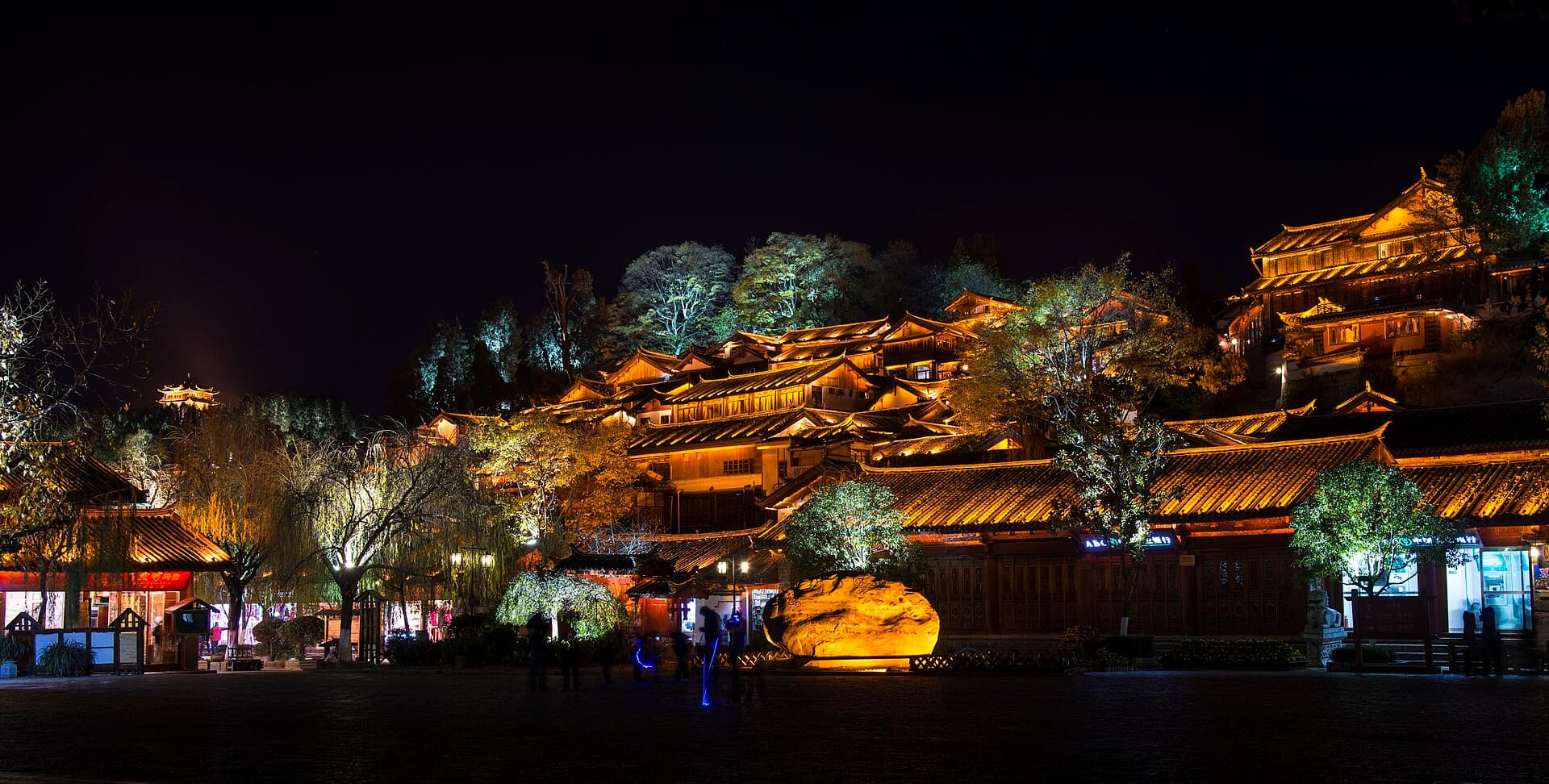
Wander Dayan (literally 'great ink slab,' the walled Naxi market town at the heart of Lijiang Old Town (UNESCO-listed Naxi water town in Yunnan)) where 5-m-wide lanes of red breccia flagstone (coarse red-and-grey river rock) cross at will; no motor vehicles, no walls, no compass grid. The cobbled alleys descend with the canal, then split around tiny stone bridges, so the route always reveals a new roofline of grey tile or a canal-side washing-stone the moment you turn.
Sifangjie Square Stage
Sifangjie Square (Sifangjie, the 'four-direction' marketplace at the old town's heart) still hosts unscripted Naxi guqin (guqin, a seven-stringed zither central to literati culture) and Dongjing music (Dongjing, a Naxi fusion of Confucian temple orchestra and folk tunes recognized by UNESCO in 2003) sessions in the open square. Drop in after 8 PM when most tourist crowds thin and locals tune up around the old well; the sound carries down the canals for two or three blocks.
Mufu Palace Tribute Hall
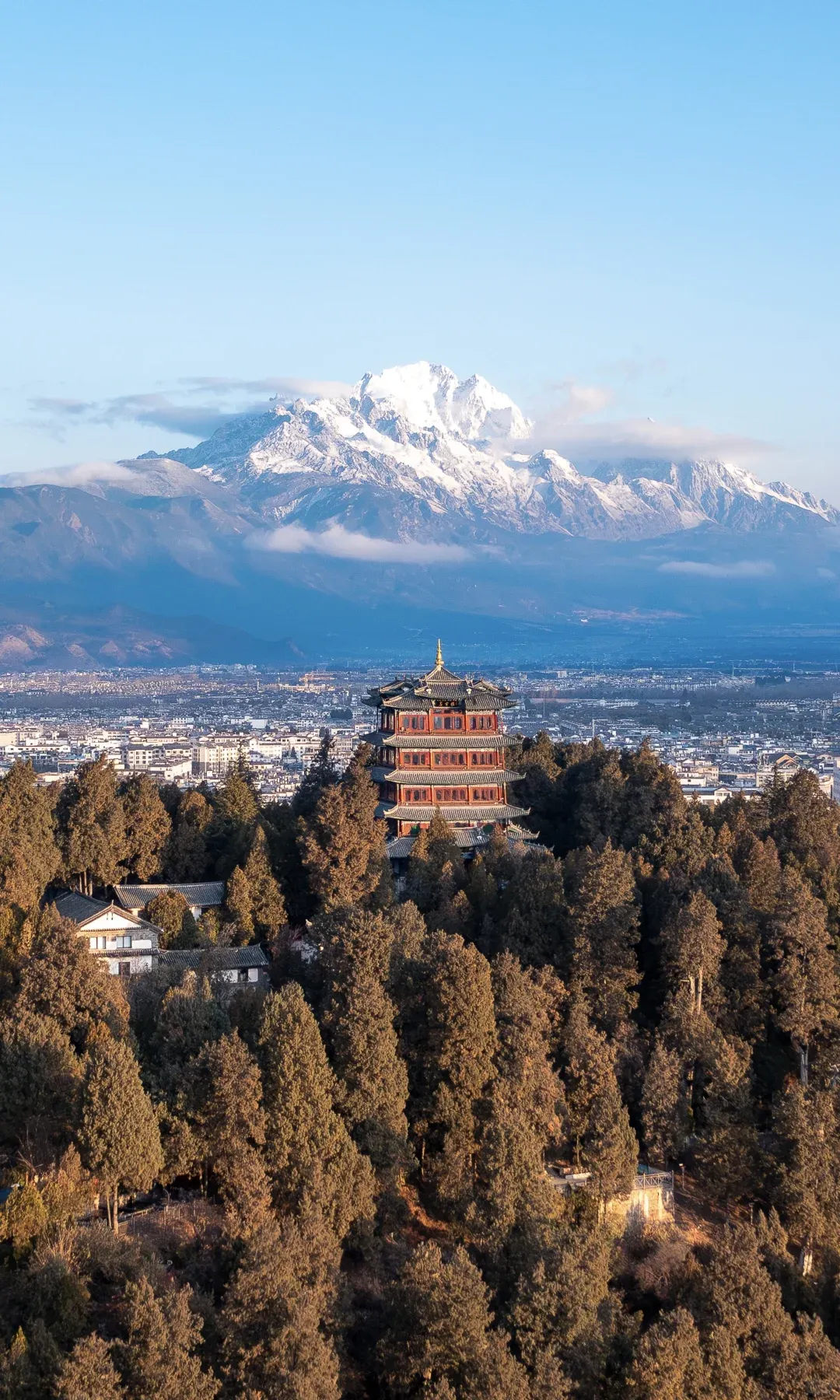
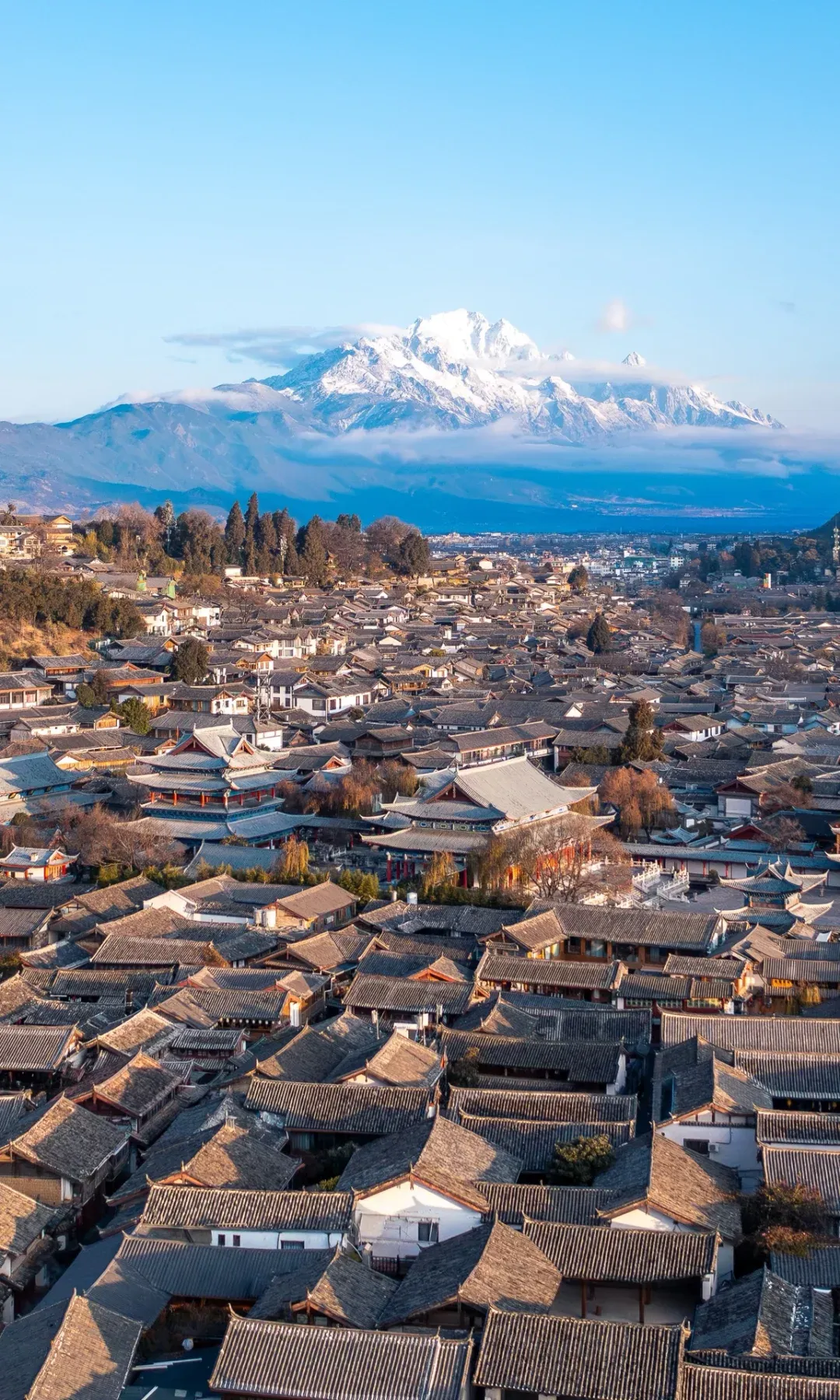
Mufu Palace (the Mu family mansion, residence of the Ming-dynasty (1368-1644 AD, Chinese imperial dynasty) hereditary tusi (tusi, a Chinese term for a hereditary tribal chieftain appointed by the central government) chieftain, rebuilt 1999) rises against Lion Hill with carved dragon-and-phoenix gates and a Tianjidiansheng tablet (a calligraphic plaque gifted by the Wanli Emperor (r. 1572-1620) of Ming China, hung in the main hall). Climb the Yutade Platform at the rear for a single-frame view of grey-tile rooftops and Yulong Snow Mountain in one composition.
Black Dragon Pool Yulong Reflection
Black Dragon Pool (Heilongtan, a spring-fed pool just north of Dayan, popular with local retirees) frames Yulong Snow Mountain (Yulong Xueshan, 5,596 m, the closest snow peak to a Chinese city center) perfectly at sunrise. A weathered marble arch (built 1737, Qing Dynasty (1644-1912)) and the Deyue Pavilion (Moon-Worshipping Pavilion) sit on the far bank, mirrored in the still water. Arrive by 7:30 AM in autumn for a clean reflection and a line of elderly residents practicing tai chi against the snow line.
Lijiang Cup-Bridge Photo Spot
One Lijiang-internet-icon spot lives on a small canal arch near Xianwen Bridge: stand on the bridge side, the cobble lane, the canal, the low grey-tile houses, and the distant Yulong range line up in a single vertical. Photographers line up from 7 AM in clear weather; weekday off-season visits get the composition clean. Sunrise gives a warm edge on the tiles, late afternoon softens the snow.
Wild-Mushroom Hot Pot
Wild mushroom (jianjun, 'mountain mushrooms' picked July-September from Yulong's pine forests) hot pot is the one dish to try in Lijiang, cooked at the table in a clay pot of chicken or cured-ham broth. The broth waits for every mushroom to finish cooking (never lift the lid early); a chalk-countdown clock on the table tracks the 15-minute mark, then you eat. Skip tourist-trap Sifangjie frontage and look two streets back where the same dish costs half.
Naxi Costume Portrait Walk
Around the old town you can rent traditional Naxi dress (cape-style 'xuelian' shoulder-piece over a belted jacket) and walk the lanes and canals in a one-hour photo session; several studios cluster near Mu's main gate. The costume is layered so it photographs in any weather, and the cobble lanes give a long clean backdrop. Best light sits 90 minutes before sunset; book through your guesthouse the day before.
Dayan Aerial at Blue Hour
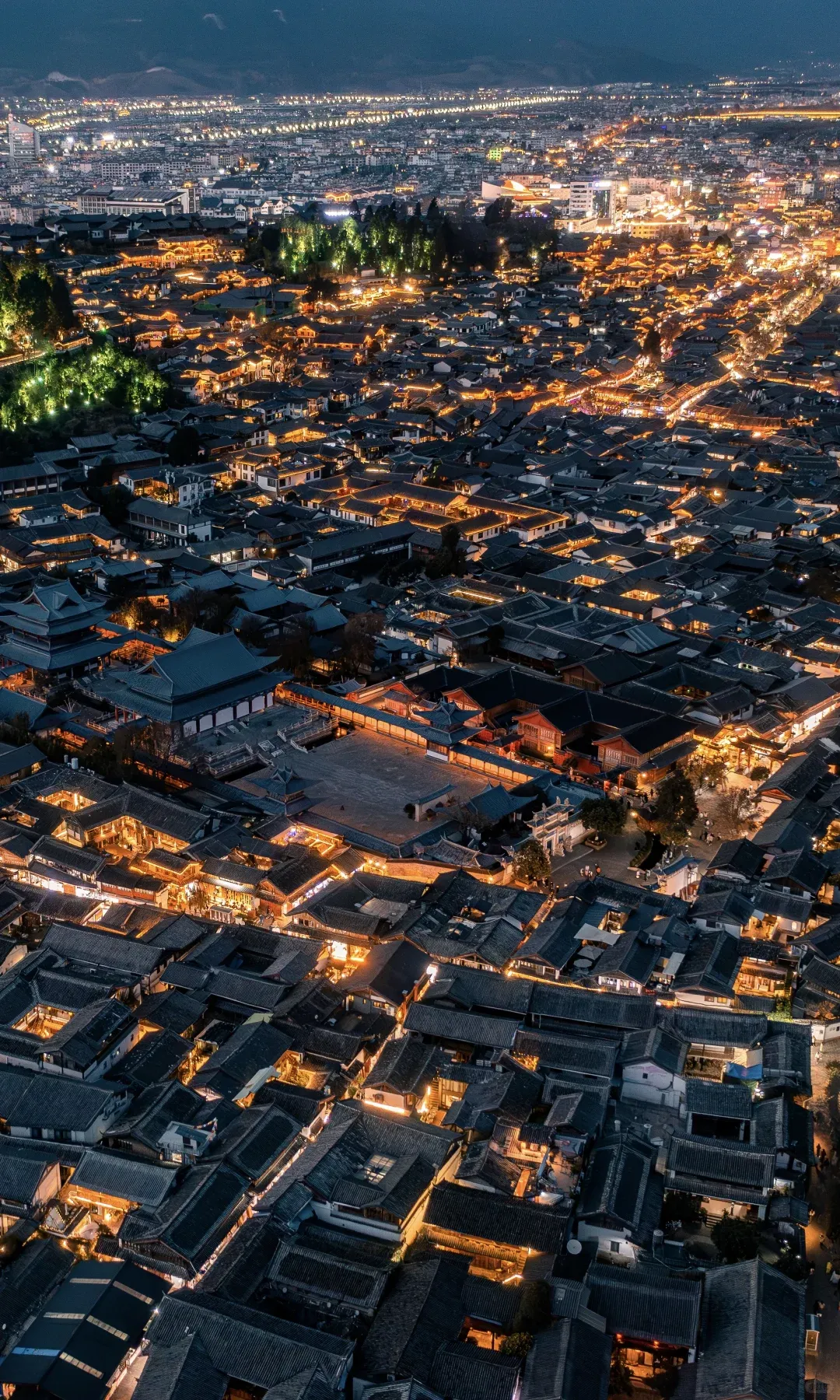
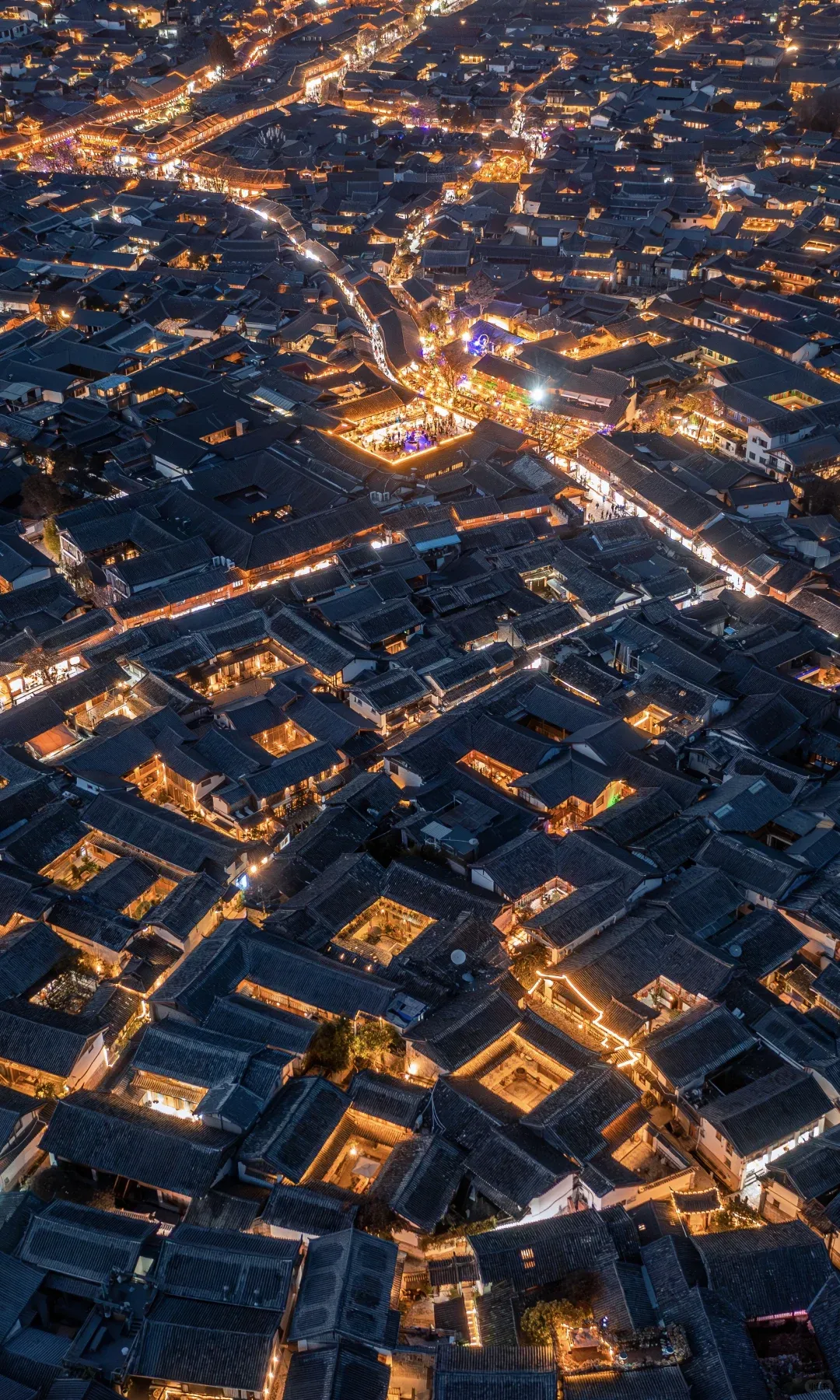
The single most-photographed Lijiang shot is an aerial of Dayan Old Town from a low-flying drone at blue hour (5-10 minutes after sunset, when the sky holds deep blue and the warm lanterns below are fully on). The grey-tile roof grid is so dense and uniform that the frame reads like circuit board under string-light veins. Confirm no-fly rules with the guesthouse and avoid launching over Mufu Palace or the town center for permit reasons.