
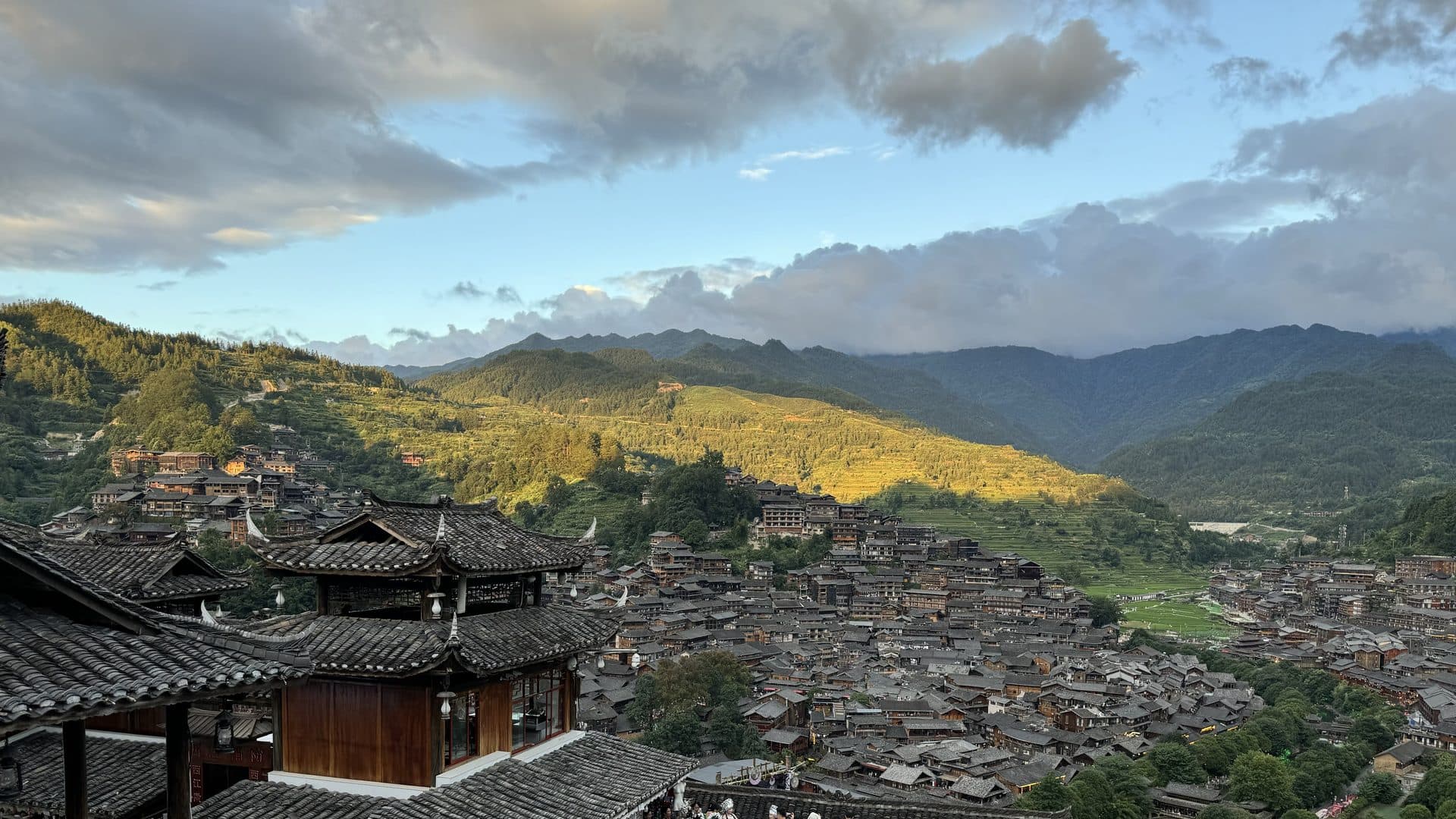
Xi Jiang Qianhu Miao Village
The world's largest Miao settlement - 1,468 stilted homes on a lush hillside, ablaze with ten thousand lamps at night.
 Written and signed by Marcus Yang
What it actually is
The world's largest Miao settlement with 1,468 stilted households cascading down a forested mountainside in Guizhou, split by the Baishui River. Known as an 'open-air museum,' it preserves Miao traditions, festivals, silver ornaments, song, and dance. At night, thousands of lamps create one of China's most iconic rural vistas.
Editor's take
Worth it for one thing above all — the after-dark lantern-lit hillside — so only go if you'll stay the night to see it; if you're passing through for a few daytime hours or you bristle at commercialized, pricey tourist towns, I'd skip it.
Essentials
Good to know
Trending now
Ten Thousand Lights Night View
The signature experience - as dusk falls, the village transforms. Thousands of windows illuminate the hillside in sequence, creating a second galaxy mirrored on the Baishui River. Best viewed from the Viewing Platform between 20:00-21:30.
Ga Gayika Ancient Alley
The cultural heart of the village - silver hammering, indigo batik, and ancient handcrafts are demonstrated in situ. Afternoon light casting long shadows on the wooden walls makes it the most photogenic lane in the village. Open all day, free to walk.
Terraced Fields Summit View
A hidden back-mountain trail climbs to a panorama point overlooking both the village and the surrounding agricultural terraces. Wear light-colored clothing to contrast with the deep greens. The viewpoint is unmarked - ask locals for the 'mountain health trail' near the West Gate.
Traditional Miao Costume Experience
Miao silver-adorned traditional clothing rentals start at 30-80 yuan for the outfit alone; a full package with professional styling and accessories runs 199 yuan at the village's many photography studios. The experience is considered essential by most visitors.
Miao Museum & Guzang Hall
The Miao Museum displays ancient artifacts, ceremonial objects, and historical documents. Adjacent Guzang Hall hosts the most important ritual ceremonies. Both are free to enter and offer rich context for understanding the culture before exploring the village.