
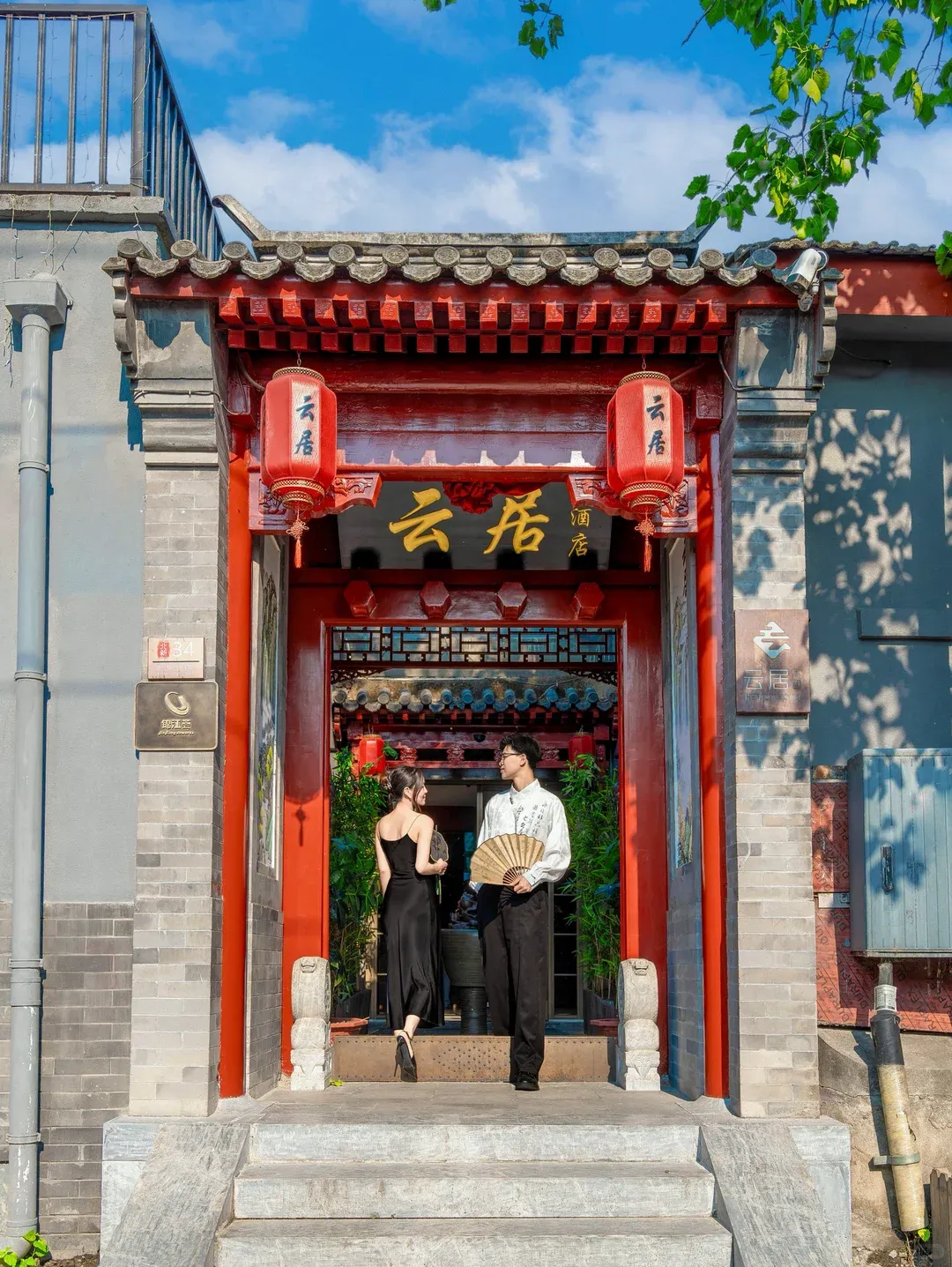
Wudaoying Hutong
A Ming-era shrine to Guandi (the deified Guan Yu, God of War) tucked into Wudaoying Hutong, a 632-meter lane of courtyard teahouses.
 Written and signed by Xiangqun Li
What it actually is
Wudaoying Hutong (traditional Beijing alleyway lined with courtyard houses) is a 632-meter lane of gray-brick courtyard shops beside the Lama Temple. It merges a Ming-era Guandi worship site, late-Qing courtyard housing, and a present-day cluster of independent teahouses and design boutiques. The lane is walkable in under two hours and pairs naturally with the neighboring Lama Temple.
Editor's take
Go if you like slow, aimless wandering and want a calmer, less commercialized alternative to Nanluoguxiang — but treat it as one stop paired with Guozijian, not a destination. I'd skip it if you're chasing big sights or hate window-shopping; on its own it's just a nice short lane.
Essentials
Good to know
Trending now
A Ming-era Guandi shrine
The Guandi temple at lane number 60 was built during the Ming dynasty (1368-1644) when the lane housed a Ming garrison known as Wudewei Ying. Devotees still burn incense at the gate, and the faded red paint and lion knockers survive from earlier restorations.
Late-Qing courtyard housing
After 1644 the Qing dynasty (1644-1912) reorganized the garrison into civilian housing under the Bordered Yellow Banner (Xianghuang Qi). Gray-brick siheyuan (courtyard houses facing on four sides) from this era still line the lane and shape its low-rise character.
A slow lane of courtyard teahouses
Since the 1990s independent teahouses and design boutiques have occupied the lower courtyards. Today the lane holds about 86 businesses, many serving jasmine or aged pu-erh tea on wooden benches. The unhurried pace defines a half-day visit.