
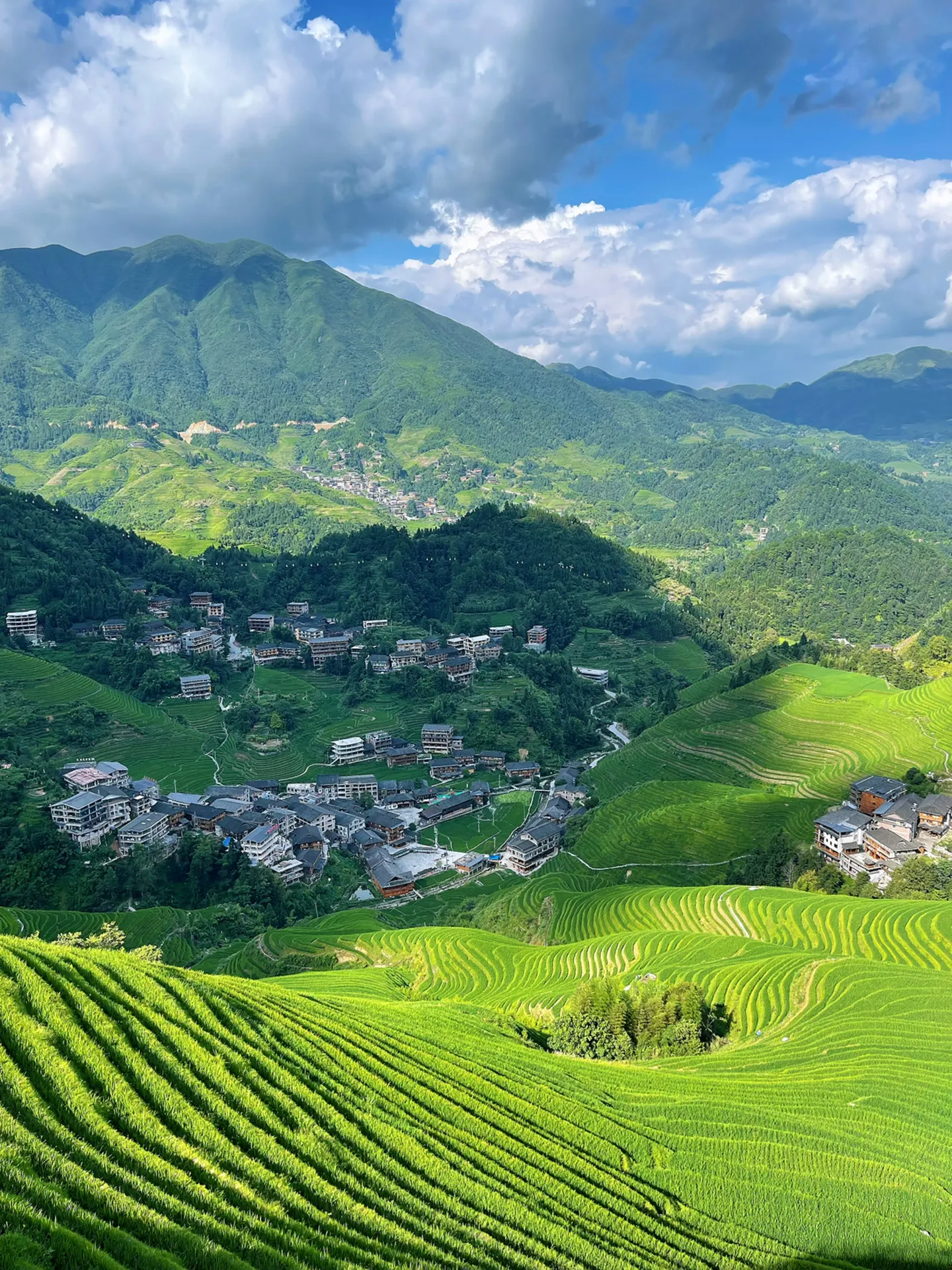
Longji Rice Terraces
A 2,300-year-old cascade of rice terraces carved into Longji mountain, home to Zhuang and Yao villages.
 Written and signed by Ivy Chen
What it actually is
Longji (Dragon's Backbone) Rice Terraces sprawl across 66 square kilometres of the Yuecheng range in Longsheng County, a 2,300-year-old mosaic of paddies cut into mountain ridges by Zhuang and Hong Yao (Red Yao, a Yao sub-group) farmers. The cascade climbs 380 to 1,180 metres across three viewing areas.
Editor's take
Worth the effort if you go in the right season, stay a night, and stick to two villages; a rushed, mistimed day-trip in poor weather won't show you why it's famous.
Essentials
Good to know
Trending now
Mirror-flooded paddies in late April
Every late April, farmers open the mountain streams and the terraces fill one paddy at a time from the top down. By the last week of April the cascade reads as a single mirror that catches the early-morning clouds; the Seven Stars with Moon cluster is the most-photographed for good reason (best at 7:00-9:00 AM in Apr-May when flooded paddies mirror the ridges above).
Hong Yao long-hair tradition
The Red Yao (a Yao sub-group famous for long hair) women of Jinkeng Dazhai cut their hair only once in a lifetime - at 18, when the cut hair is kept in a family heirloom comb. Visitors can watch a hair-washing demo in most village homestays, using rice-water fermented in wooden barrels that the Yao say keeps hair black past 80.
800-metre vertical climb on one ridge
The terraces stretch from 380 metres at the valley floor to 1,180 metres on the highest ridge - the entire mountain is one continuous paddy wall. The classic hike links Ping'an to Jinkeng Dazhai along a paved stone path through seven Zhuang and Yao hamlets, about 4 hours with stops.