
Shangri-La
High-altitude Tibetan town where prayer wheels, monasteries and alpine lakes meet at 3,300 m.
 Written and signed by Ivy Chen
What it actually is
An old Tibetan town wrapped around a 1,300-year-old stone quarter, ringed by 3,300 m plateaus, prayer-flag valleys and alpine lakes an hour away.
Editor's take
Worth a 2-3 day stop if you can spend one night acclimatizing at altitude; skip if you have less than a full day or want a single-base resort town. Best for first-time Yunnan travelers who want a real Tibetan setting without the Lhasa logistics.
Essentials
Good to know
Trending now
Dukezong Old Town Stone Lanes
Dukezong (Moonlight City), founded in the 7th century during the Tubo (Tibetan) Kingdom, is laid out around a central square and a 1.2 km stone lane loop. The cobblestones are still walked by Tibetan herders in chuba (heavy wool robes) selling butter and yak cheese alongside Han-run guesthouses.
The World's Largest Prayer Wheel
The 21 m, 60-ton gilded copper Guge Great Prayer Wheel at the north end of Dukezong needs roughly eight adults to set turning. Pilgrims walk clockwise three times, murmuring the six-syllable mantra; visitors are welcome to join.
Songzanlin (Yunnan's largest Tibetan Buddhist) Monastery at Dawn
Songzanlin (Yunnan's largest Tibetan Buddhist monastery), founded in 1679 by the fifth Dalai Lama's emissary, sits 7 km north at 3,380 m and reads as a scaled-down red-and-white Potala. From 07:30 monks file in for morning chanting; the climb to the upper hall looks straight across the old town and the Yulong Snow Mountain ridge.
Pudacuo's Bita Lake Boardwalk
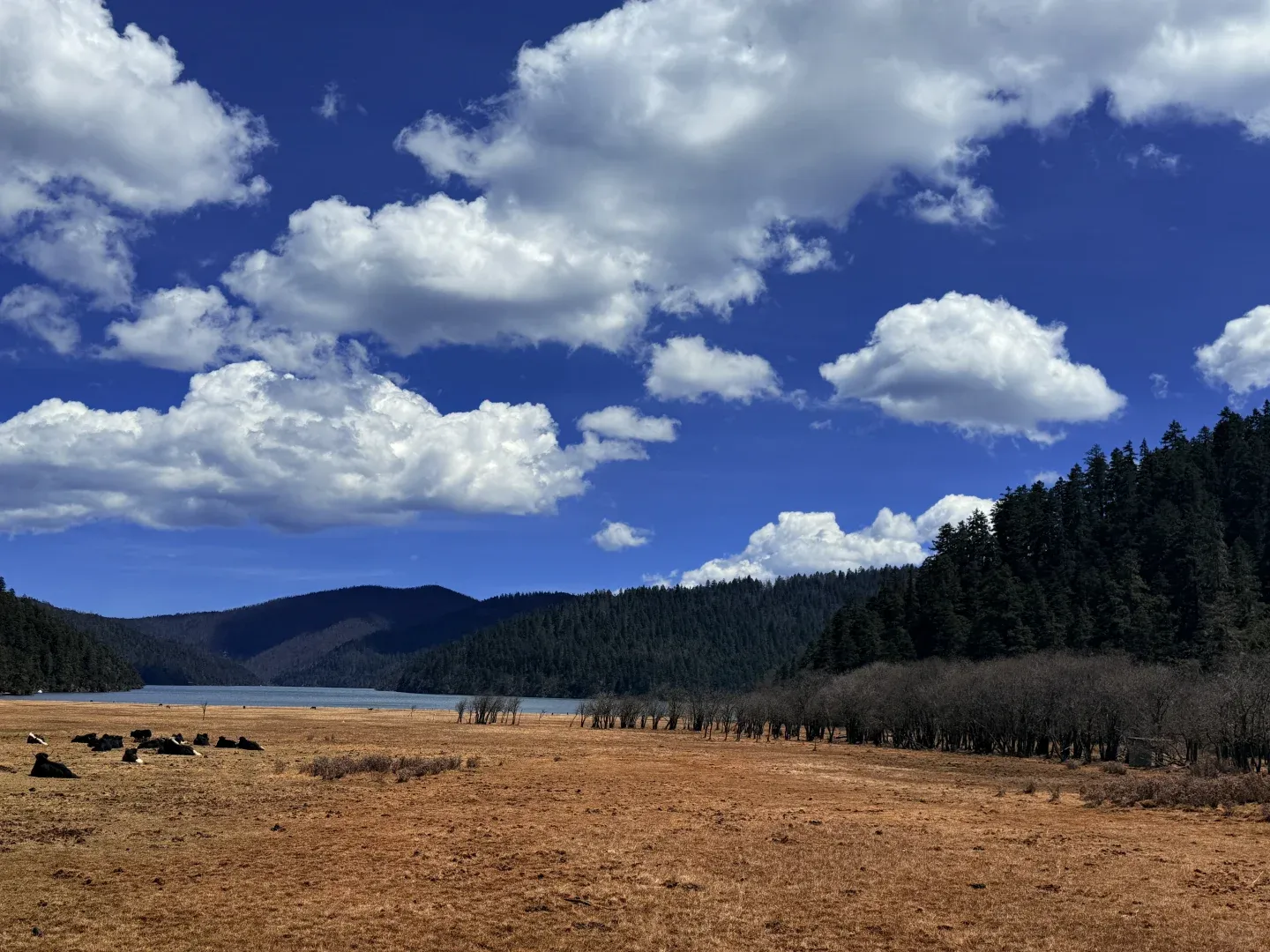
Bita Lake in Pudacuo National Park sits at 3,500 m inside a yak-grazed fir valley; a 4 km wooden boardwalk keeps visitors off the fragile meadow. In October the dwarf willows turn copper and the lake mirrors the snow-fed peaks.
Napa Lake's Highland Wetlands
Napa Lake is a 660 sq km seasonal wetland that fills from June; November through March it drains into pasture, and black-necked cranes winter on the open grass. The east-boardwalk vantage gives the cleanest reflection of Yulong Snow Mountain at first light.
Tibetan Butter Tea and Yak Cheese
In Dukezong family-run Tibetan teahouses brew butter tea (yak butter, brick tea and salt whipped to a foam) alongside barley flatbread and yak-milk cheese. The heavy, salty cup is the right answer to a 3,300 m morning; visitors from lowland China usually need a day to acquire the taste.
Sky Burial and Cremation Traditions
Buddhist funeral rites around Shangri-La still include sky burial at designated sites north of the city, where vultures consume the deceased as final charity. Visitors are not permitted at the sites; respect the practice and avoid photographing procession routes near monasteries.
The Hengduan Mountain Setting
Shangri-La sits inside the Hengduan Mountains (a series of parallel north-south ranges running between the Tibetan Plateau and the Sichuan Basin), where three of Asia's great rivers — the Yangtze (China's longest river, roughly 6300 km), Mekong (Southeast Asia's longest, 4350 km) and Salween (also called the Nu, 3240 km) — flow within 80 km of each other. That geography is why the air is thin, the light is sharp, and the town has been a trading crossroads for over a millennium.