
Hibiscus Town
A 2,000-year-old Tujia village built around a 60-meter waterfall in western Hunan.
 Written and signed by Lena Zhou
What it actually is
A 2,000-year-old Tujia village in western Hunan, built around a 60-meter waterfall that runs through the heart of the settlement. Stilted houses line both sides of the gorge.
Editor's take
Worth it if you stay overnight and time it for the night-lights, less worth it as a half-day stop on a tight Xiangxi loop. Best for travelers who already plan to see the Red Stone Forest and have a slow second day. Skip if you can only visit in winter or if a tight schedule forces you here mid-afternoon.
Essentials
Good to know
Trending now
The 60-meter cascade through the village
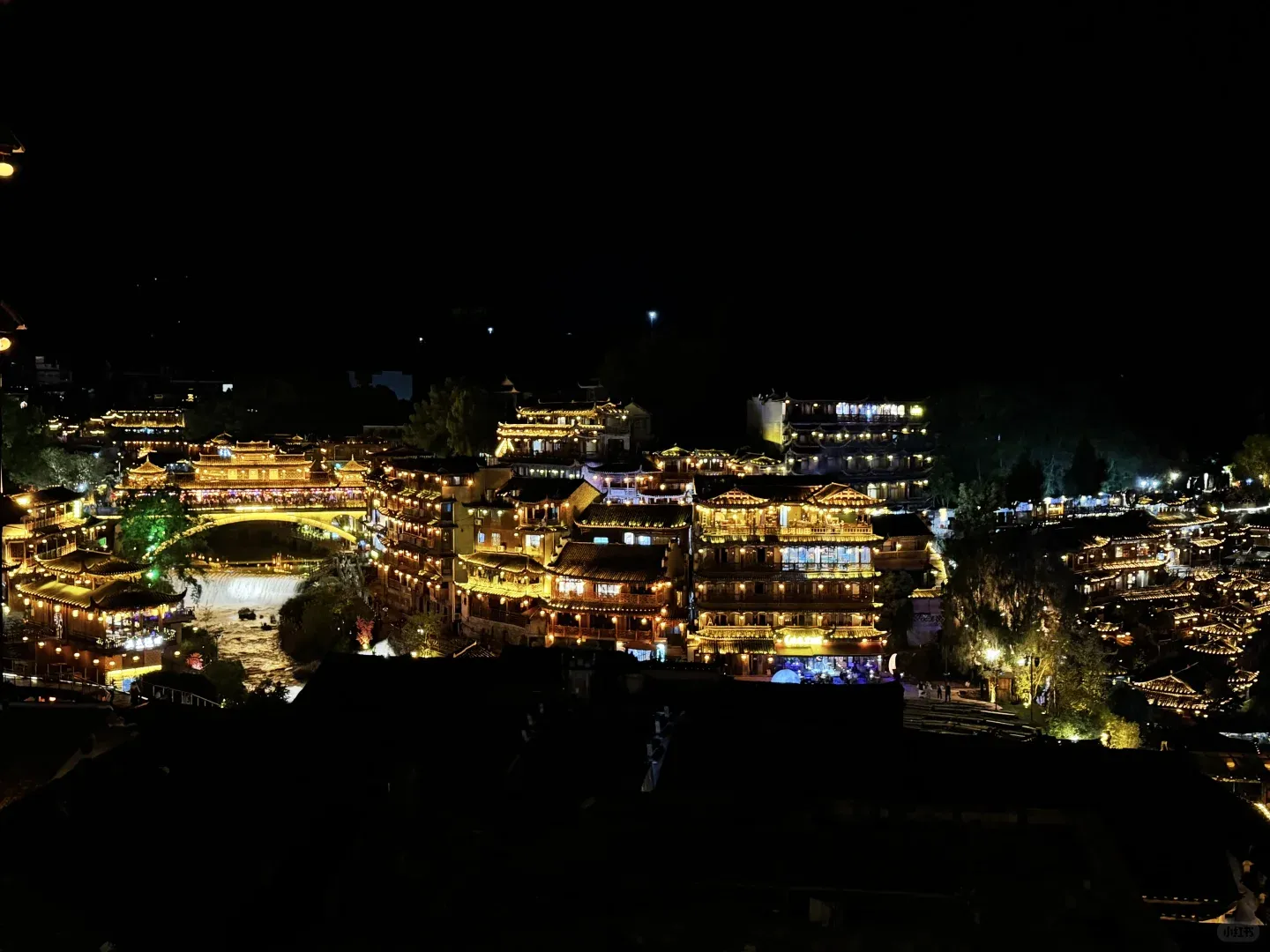
Hibiscus Town sits directly on a 60-meter waterfall; the cascade runs through the heart of the settlement and frames the stilted houses on both sides. Tujia stilted houses (diaojiaolou, a Tujia minority wood-frame house style) line the cliff above and below the falls, and the Wuli Slate Street climbs between them.
Cliff-side lantern light at night
After dusk, lanterns along the cliff switch on and the cascade turns into a glowing curtain. Most visitors rate the night view above the day view and plan an overnight stay for the full effect; the photo platform above the falls is the most-crowded vantage point at this hour.
Tujia heritage in stone and wood
The village has roughly 2,000 years of Tujia (a mountain-dwelling ethnic minority recognized in China's regional autonomy system) history, with the Tiaoyan stepping stones, the bronze-pillar park, and the original Wangcun dock all still walkable. The Wuli Slate Street is a 5-li (about 2.5 km) stone-slab lane linking the lower river to the upper town, and the on-site museum explains the local Tujia crafts.