
Eling Park
A century-old hilltop garden with panoramic two-river views, cliffside boardwalk, and free entry.
 Written and signed by Ivy Chen
What it actually is
Eling Park is a century-old urban hillside garden in Yuzhong District, Chongqing, with terraced landscapes, century-old camphor trees, and the landmark Kan Sheng Lou observation pavilion offering sweeping two-river panoramas. Free admission, open 06:00-22:00.
Editor's take
Eling Park is the one Chongqing attraction that genuinely earns its reputation. The hilltop position above the city's dense fabric, the Qing Dynasty-era pavilion, and the cliffside boardwalk all deliver something you can't get elsewhere — a moment of stillness and a perspective that puts the whole city in frame. Go early in summer, go for sunset in winter, and don't skip the boardwalk. The only people who should skip this are those who find any attraction with tour groups intolerable — arrive before 9 AM and you won't have that problem.
Essentials
Good to know
Trending now
Kan Sheng Lou — Panoramic Two-River View
The four-story octagonal Kan Sheng Lou (Kan Sheng Pavilion, 'Tower that Surpasses All Views') is Eling Park's defining landmark. From the top you can see the brown Yangtze (China's longest river, roughly 6300 km) and green Jialing River meeting below — the color contrast is most dramatic on clear, dry-weather days. Built during the Qing Dynasty (1644-1912) and restored multiple times since, it remains the most iconic observation point in central Chongqing.
Cliffside Boardwalk to Fotu Pass (460m)
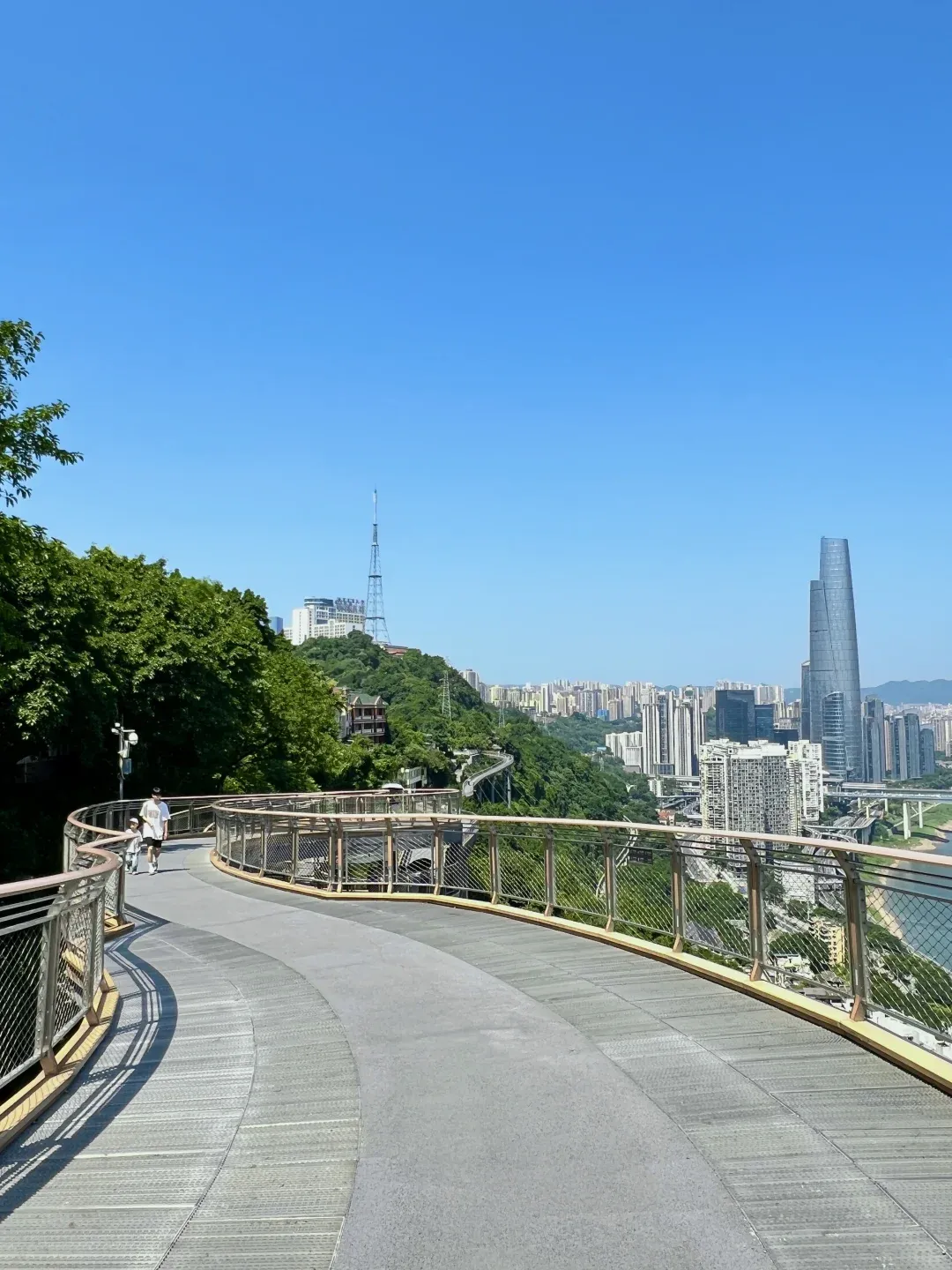
The 460-meter elevated boardwalk connecting Eling Park to Fotu Pass is the most dramatic piece of infrastructure in the park — a transparent walkway bolted into the cliff face with sweeping views over Chongqing's layered highway system. The first viewing platform after the entrance is the most photographed angle. The boardwalk is one-way; enter from the park side only.
Century-Old Garden Landscape
Eling Park's terraced layout and ancient camphor trees (some over 100 years old) create a genuinely historic atmosphere rare in central Chongqing. The combination of Republic of China era (1912-1949) pavilions, lotus ponds, and bamboo groves gives the park a contemplative quality that contrasts sharply with the hyperactive city below. Open since 1919, it has been a Chongqing landmark for over a century.