
Beijing Temple Of Heaven
A 15th-century imperial altar where Ming and Qing emperors prayed for good harvests, now a 273-hectare park with blue-tiled domes.
 Written and signed by Xiangqun Li
What it actually is
Built in 1420 during Ming Yongle reign as the imperial altar where emperors prayed for good harvests, the Temple of Heaven (Tiantan) is now a 273-hectare public park crowned by the 38 m triple-gabled blue-tiled Hall of Prayer for Good Harvests. UNESCO-listed since 1998, it remains the most iconic silhouette of imperial Beijing.
Editor's take
Temple of Heaven is the single best Beijing landmark for a half-day visit if you can hit it on a non-Monday morning. Photographers, history readers, and anyone curious about how a 15th-century cosmology still organizes a public park will get their money back. Skip it if you only have a Monday, or you are traveling with anyone who cannot stand crowds at Qinian Dian.
Essentials
Good to know
Trending now
Qinian Hall After The Rain
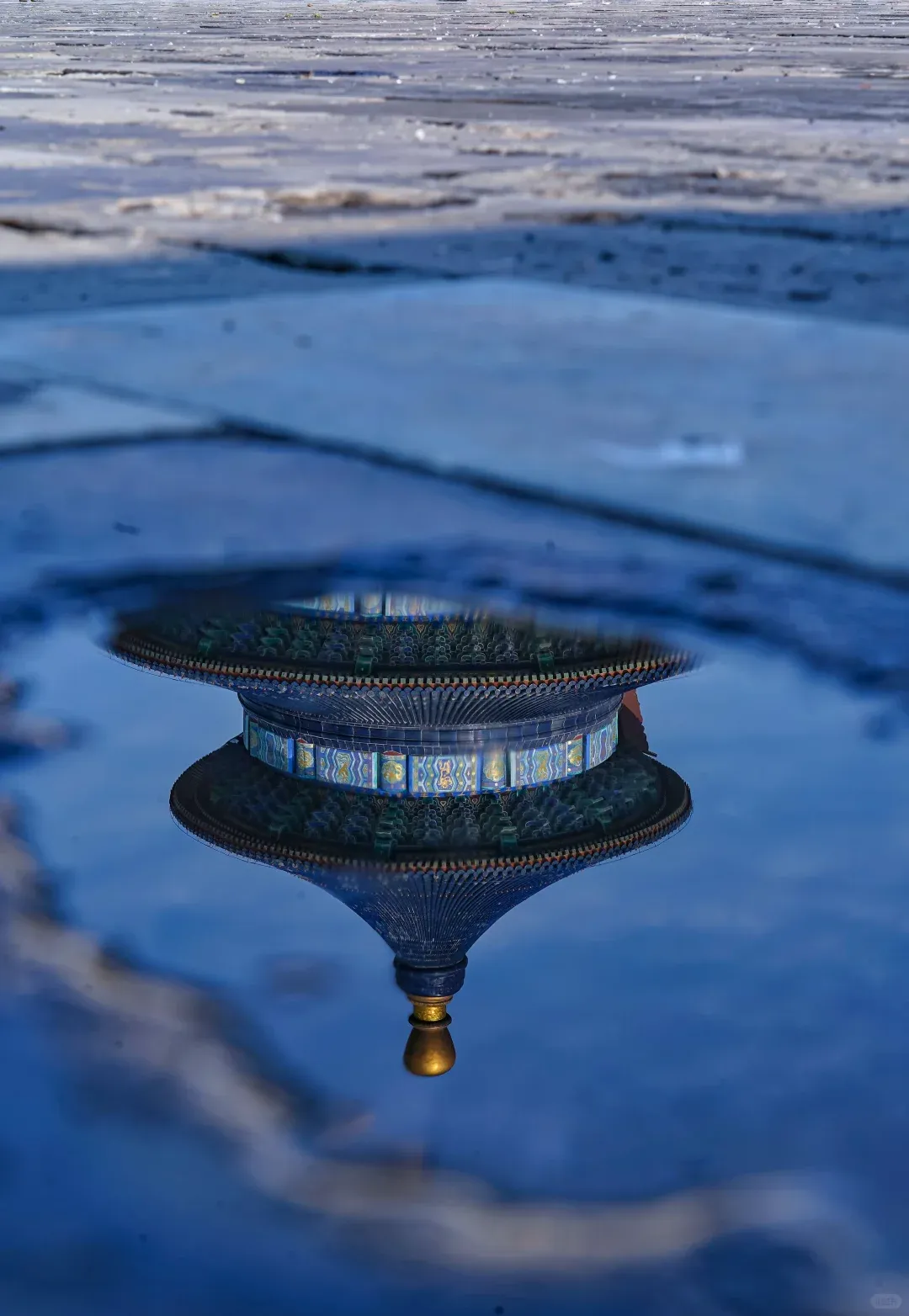
The Hall of Prayer for Good Harvests (Qinian Dian, a 38 m triple-gabled blue-tiled round hall built in 1420 during the reign of Ming Emperor Yongle) gleams hardest right after summer rain. Bring a water bottle; the wet flagstones mirror the dome so the whole temple floats upside-down below you. Photographers cluster here, but find a clear angle near the south gate before 9 AM and you will have the reflection to yourself.
Shuanghuan Wanshou Pavilion
Step back from Qinian Dian and look for the double-eave Shuanghuan Wanshou Ting (a paired pavilion in saturated imperial colors). Stand a few meters in front, point the camera up, and the curve of the roof tiles fills the frame with red, green and gold against the Beijing blue sky, best at 9-11 AM in April-October when the light is even.
Echo Wall And Circular Mound
The Huanyin Bi (Echo Wall, a 193 m circular brick parapet built in 1530 during Jiajing reign) still carries whispers across its curve, though a railing now keeps visitors a step back. Pair it with the Yuanqiu Altar (Circular Mound Altar, three tiered terraces of white stone laid in multiples of nine) for the templest silence in central Beijing. Go after 4 PM when tour groups thin out.
Echo Wall And Circular Mound
The Huanyin Bi (Echo Wall, a 193 m circular brick parapet built in 1530 during Jiajing reign) still carries whispers across its curve, though a railing now keeps visitors a step back. Pair it with the Yuanqiu Altar (Circular Mound Altar, three tiered terraces of white stone laid in multiples of nine) for the most temple-like silence in central Beijing. Go after 4 PM when tour groups thin out.