
1933 Old Millfun
A 1933 slaughterhouse reborn as Shanghai's iconic concrete-maze creative hub in Hongkou—the name "Old Millfun" plays on the site's Chinese name 老场坊 (old workshop quarter).
 Written and signed by Ivy Chen
What it actually is
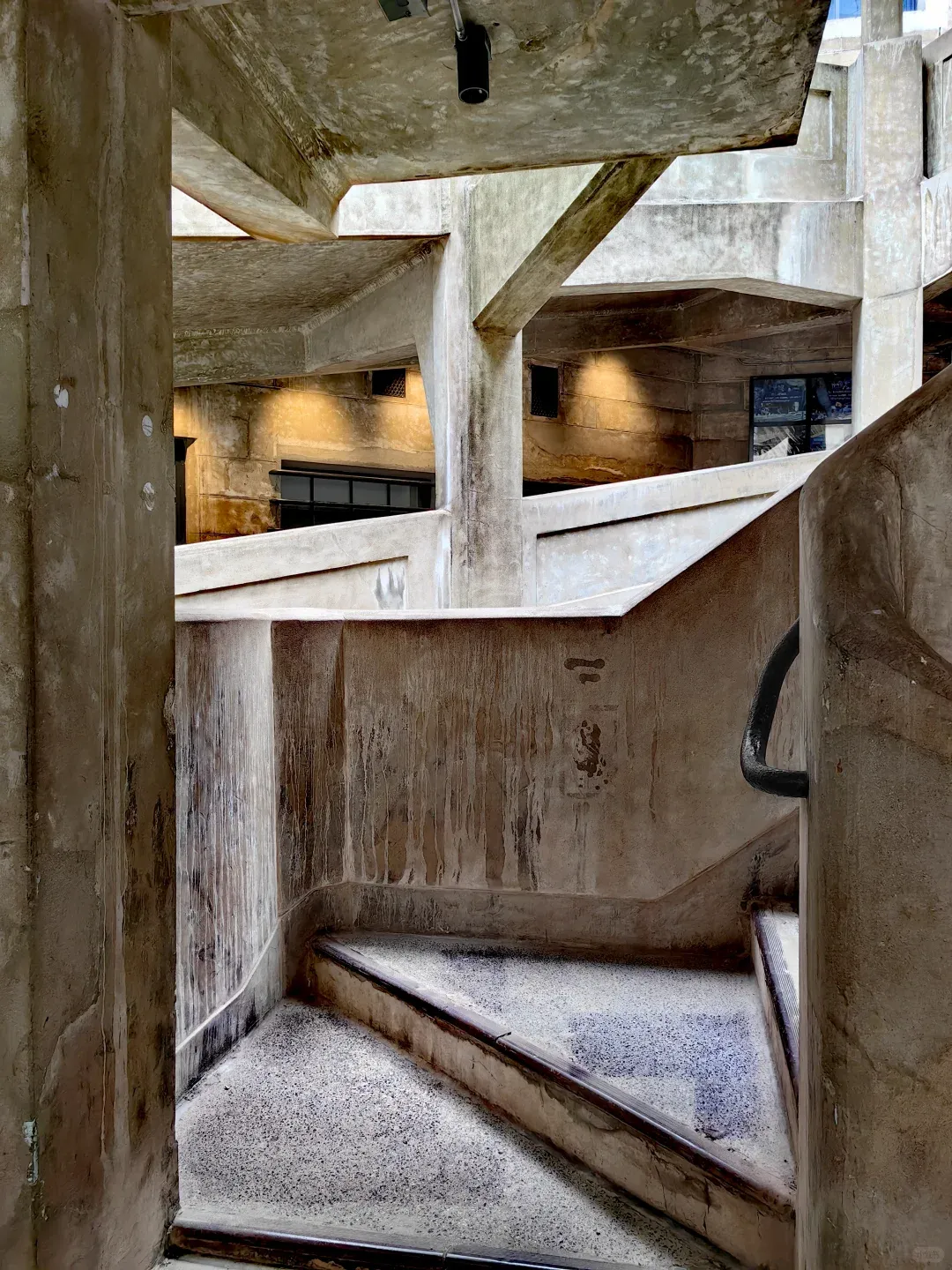
1933 Old Millfun (Lao Chang Fang) is a 1933 British Municipal Slaughterhouse reborn as a labyrinthine creative hub in Hongkou, with concrete bridges and an octagonal light well. Free to enter and photographer-friendly, it loops in an hour.
Editor's take
Worth an easy 90 minutes in Hongkou or as a counterpoint to the Bund (Shanghai's iconic riverside promenade); skip if you want a polished, fully-tenanted heritage site. The architecture is the show.
Essentials
Good to know
Trending now
Octagonal central light well
The 1933 British architect laid out 26 angled concrete bridges around an octagonal atrium so that daylight from a glassless roof would reach every working floor - it became a hallmark of what later practitioners called Brutalism (raw-concrete monumentality that emerged in the 1950s), though this building predates the term by two decades. Wander the ramps with your phone tilted up for the strongest geometric read.
Bridge maze overhead
The upper storeys link a network of 26 narrow concrete bridges that photographers love for shadow lines and framed-sky shots. Walk the bridges clockwise so you don't back-track, and aim for the third-floor crossing where the bridge grids sit in cleanest perspective against the central tower.
From slaughterhouse to creative hub
By the late 2000s the building had been converted into a cluster of cafes, design studios, and small galleries; today roughly half the ground-floor tenancies sit vacant, which most visitors read as atmospheric quiet rather than decline. The upstairs remains as-built - an honest walk through early-20th-century British colonial industrial heritage in Shanghai.
Octagonal central light well
The 1933 British architect laid out 26 angled concrete bridges around an octagonal atrium whose open, glassless roof was originally a ventilation shaft for the slaughterhouse—allowing daylight and air to reach every working floor. That raw, unglazed opening became a hallmark of what later practitioners called Brutalism (raw-concrete monumentality that emerged in the 1950s), though this building predates the term by two decades. Rare in China, the open atrium reads today as a deliberate piece of machine-age drama: wander the ramps with your phone tilted up for the strongest geometric read.