
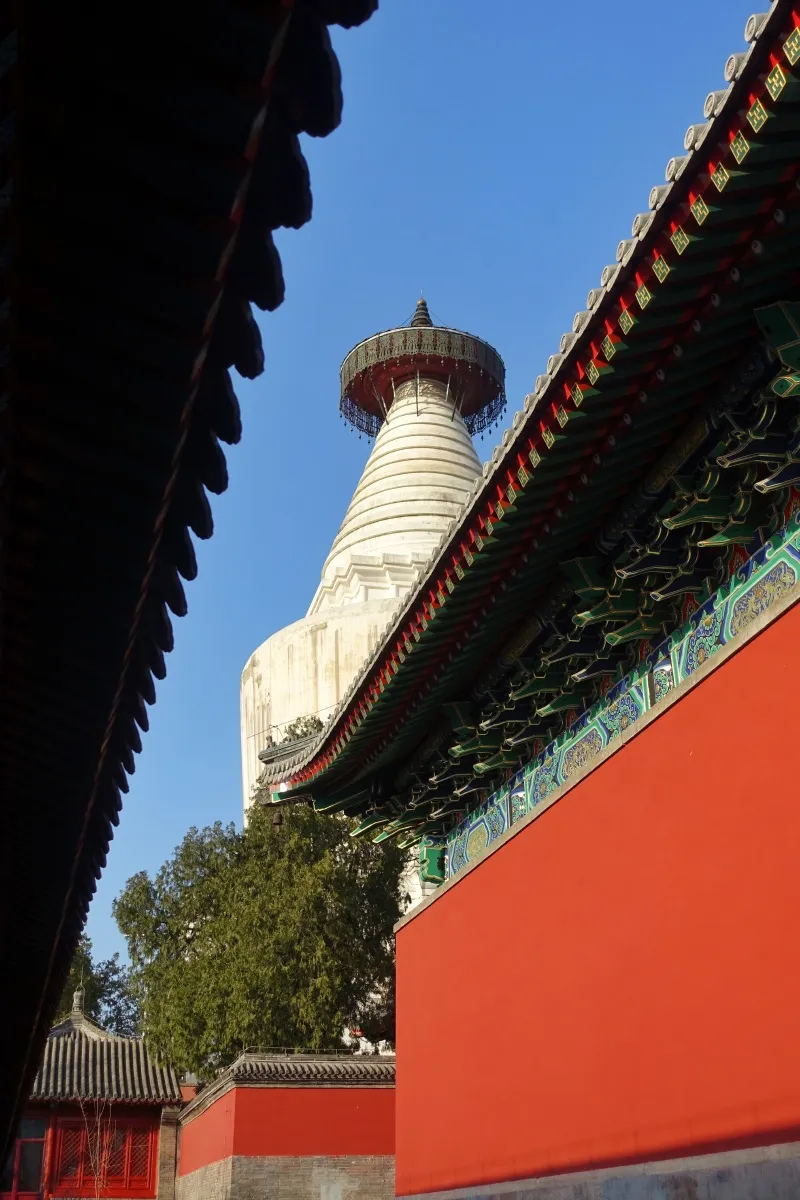
Miaoying Temple White Stupa
Yuan-era Tibetan stupa from 1279 in a Beijing hutong (traditional Beijing alleyway lined with courtyard houses) area with revived cafes.
 Written and signed by Xiangqun Li
What it actually is
Miaoying Temple (popularly White Stupa Temple) hides a 50.9-meter Yuan Dynasty (1271-1368) Tibetan-style stupa inside a 13,000 sqm walled compound of grey-tiled hutong (traditional Beijing alleyway lined with courtyard houses) lanes on Funing Street.
Editor's take
Worth it for hutong and citywalk travellers who want the quiet side of old Beijing and a real Yuan-era stupa without tour-bus crowds. Skip it if you only have one Beijing day — Forbidden City still wins. Photography enthusiasts who chase blue-hour compositions should target Friday or Saturday sunset.
Essentials
Good to know
Trending now
Yuan Dynasty (1271-1368) stupa from 1279
The 50.9-meter white stupa was completed in 1279 AD and designed by Araniko (a Newar architect from Nepal's Kathmandu Valley who later built temples at the Mongol capital of Khanbaliq). Among the largest surviving Tibetan-style stupas (a Buddhist reliquary tower crowned with 13 bronze rings) in China, with intact Yuan-era carved pedestal and Tibetan-style crown.
Hidden blue-hour stupa lighting
On Friday, Saturday, Sunday and Chinese public holidays, the stupa dome and the southern wall light up from 19:00 to 21:00. The best window sits roughly 15 minutes after sunset, when the sky drops to a deep sapphire and the warm uplighting reads against it. Most weekday visitors miss this entirely because the temple closes at 17:00.
Funing Street hutong (traditional Beijing alleyway lined with courtyard houses) revival
Gongmenkou East and West Alleys were revamped around 2024 and now host indie cafes (Yao Cafe rooftop, percent Arabica courtyard, Taxi Cafe slow-pour) and small bakeries. The stupa frames cleanly from the East Alley red wall — the city's most-photographed hutong (traditional Beijing alleyway lined with courtyard houses) and stupa composition, not from the temple grounds but from the public alley outside.