
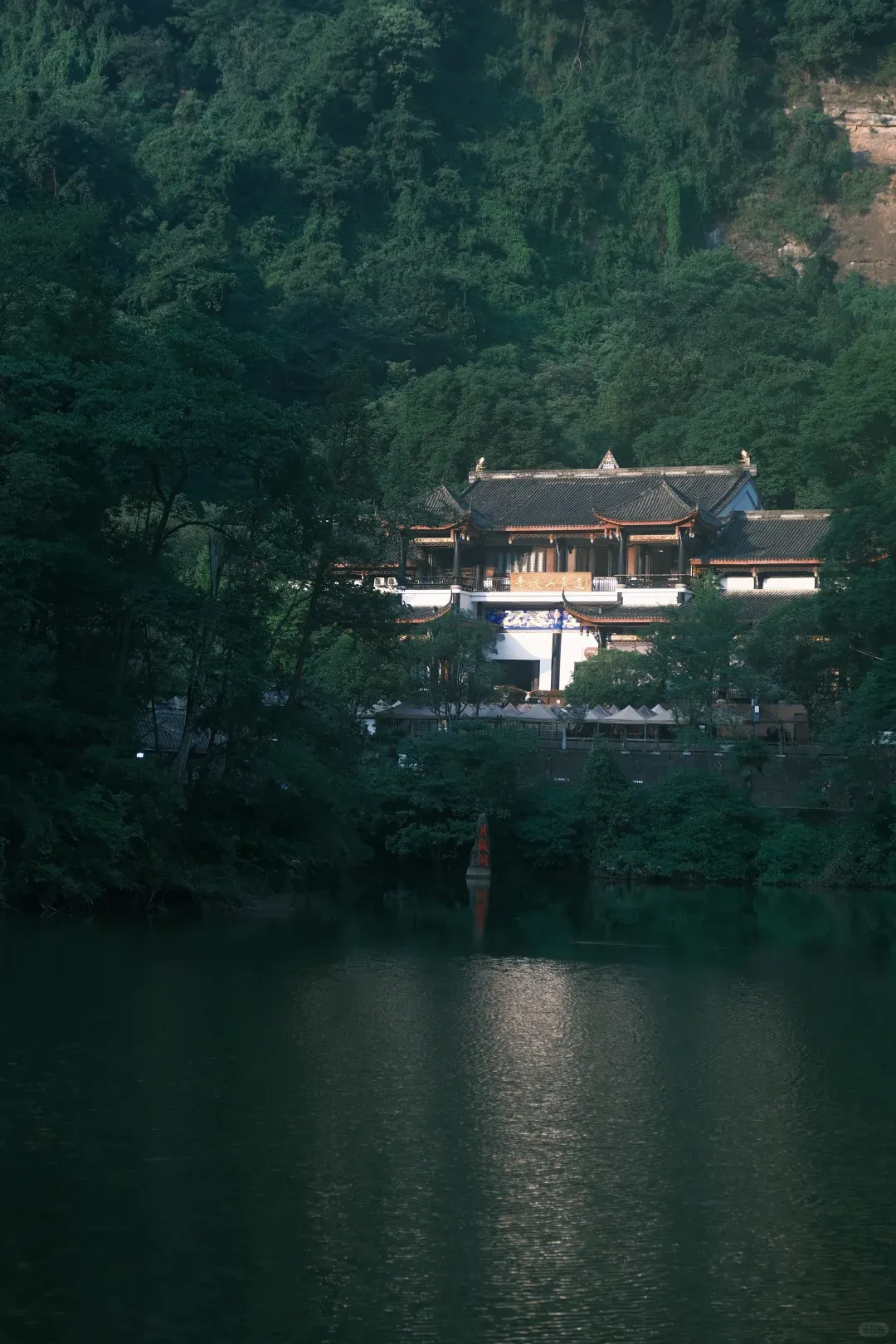
Qingcheng Mountain
Misty Taoist peaks near Chengdu where teahouses hide under ancient cedar, two hours from the city.
 Written and signed by Alex Chu
What it actually is
Cradle of religious Taoism (China's indigenous philosophical tradition founded 6th century BC), 1,800 years of layered temples under old cedar canopy, 30 minutes by high-speed rail from central Chengdu.
Editor's take
Worth a half-day visit if you have any interest in Taoism, old-growth forest, or just escaping Chengdu for the morning. Skip on weekends if you can; go straight to a weekday for the summit to feel like a walk in the woods rather than a queue.
Essentials
Good to know
Trending now
Cable-Car Ascent to Laojun Pavilion
Take the cable car from Yuecheng Lake (a small emerald pool ringed with teahouses) up to Laojun Ge (Laojun Pavilion, the 1,260-meter summit, Taoism's celestial peak honoring Laozi, the founder of Taoism, 6th century BC). The five-minute ride clears most of the climb; both walking up and down are doable in one morning if you are fit, but the descent through Jiudaoguai (Nine Turns Bend) is genuinely steep and slippery after rain.
Shangqing Palace at Sunset
Shangqing Gong (Shangqing Palace, the chief Taoist temple on the front mountain, rebuilt in the Qing Dynasty 1644-1912) catches a low slanting light against its red wall and old cedar beams around 4-5 PM. Most day-trippers have already caught the cable car down by then, so the courtyard fills with cicada noise and the smell of incense rather than selfie sticks.
Tianshi Cave and the Quiet Groves
Below the summit, Tianshi Dong (Tianshi Cave, the cave-dwelling of Zhang Daoling, founder of the Tianshi Taoist school around 142 AD) hides in a stand of 1,000-year-old camphor trees. The walking path between here and Wudongtian (Five Caverns Heaven, a string of small cave-temples cut into the cliff) is the section that earned Qingcheng its nickname 'qing cheng tian xia you' (the most secluded mountain under heaven), first coined in the Ming Dynasty 1368-1644.