
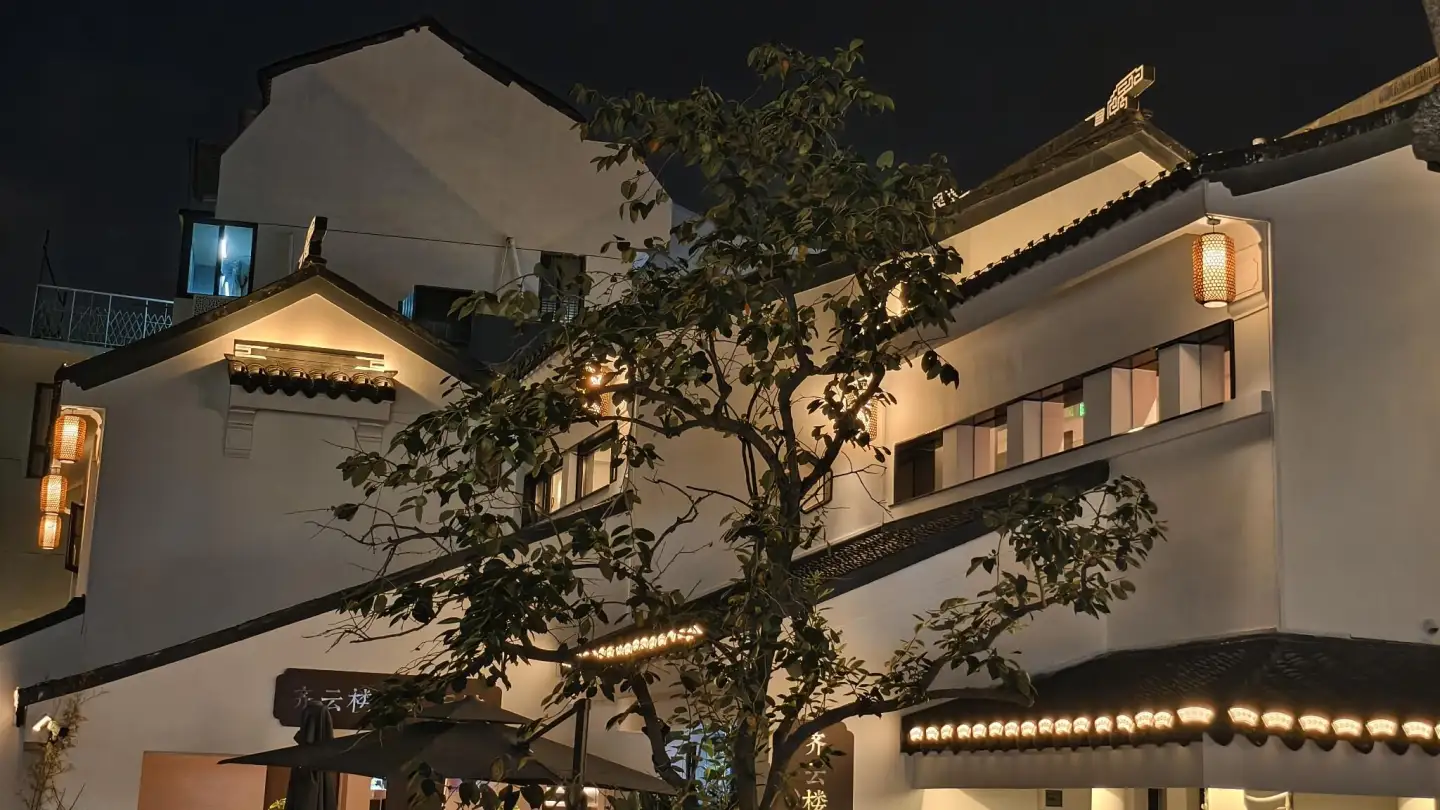
Pingjiang Road
A 1,606-meter canal-side street of whitewashed houses, arched stone bridges, and old teahouses — Suzhou's best-preserved ancient quarter, with pingtan storytelling and a Kunqu
 Written and signed by Azalea
What it actually is
Pingjiang Road is a 1,606-meter canal-side street in Suzhou's old town, famed for its Song-era twin-grid layout where a stone-paved lane runs parallel to a stone canal. Boats, pingtan storytelling, and alleys leading to the Kunqu Museum make this the best-preserved ancient quarter in the Jiangnan (region south of the Yangtze (China's longest river), known for water towns) water-town region.
Editor's take
Worth a half-day minimum on any Suzhou itinerary; pair with Ou Yuan or Suzhou Museum for a full day. Skip it only if you cannot tolerate dense crowds or already dislike water-town settings.
Essentials
Good to know
Trending now
Song-dynasty twin-grid layout
Pingjiang Road keeps the Song-era plan where a stone-paved street and a stone-canald run in parallel for 1,606 meters and meet at right angles only at the bridges, a layout rarely intact in any Chinese water-town.
Hand-rowed canal boats under stone bridges
Wooden boats rowed by boatwomen in straw hats thread the canal at walking pace; a 40-minute loop is CNY 40 per person and optional CNY 5 buys a Suzhou-dialect folk song from the rower.
Pingtan storytelling in lane teahouses
Small teahouses along Daru Lane host 20-minute pingtan sets where a pipa and a guanzheng pair trade sung verses in the Suzhou dialect; tickets are CNY 20 with a pot of Biluochun tea.
Kunqu Museum at the old guild hall
The Ming-dynasty Quanjin Guild Hall is now a Kunqu Museum; an ornate carved stage still hosts free weekend performances of the UNESCO-listed opera form that once entertained imperial courts.
Lane food: qingtuan and crab noodles
Lane-side shops turn out qingtuan (glutinous-rice mochi with sweet bean or savory fillings) in spring and Su-style crab noodles in autumn; Yaba Shengjian pan-fried buns on Daru Lane are the most-cited local snack.
Couple's garden Ou Yuan at the canal's end
A 500-meter walk north reaches Ou Yuan, a late-Qing couple's garden (UNESCO) whose small theater pavilion mixes canal-town atmosphere with classical garden quiet.
Dawn quiet and lantern-lit dusk
Before 8 AM the lane belongs to delivery tricycles and one rower; after 17:00 the red lanterns along the canal warm up and the bridges turn into the most-photographed silhouettes in Jiangnan (region south of the Yangtze (China's longest river, roughly 6300 km) River, known for water towns).
Song-dynasty twin-grid layout
Pingjiang Road keeps the Song-era plan where a stone-paved street and a stone canal run in parallel for 1,606 meters and meet at right angles only at the bridges — a layout rarely intact in any Chinese water town.