
China National Tea Museum
China's only national tea museum — Jiangnan (water-town region) garden by Longjing fields. Free.
 Written and signed by Azalea
What it actually is
China's only museum devoted to tea and tea culture, set in a Jiangnan (China's historic water-town region south of the lower Yangzi) garden at the foot of Longjing tea country. Two campuses cover the botany, processing, history, and ceremony of Chinese tea. Free entry. Best in autumn.
Editor's take
Worth a half-day, especially in late October to mid-November when the maples turn. Best for travelers interested in Chinese tea culture, photographers looking for Jiangnan-garden shots, and anyone pairing the museum with the Longjing tea fields. Skip if you only have an hour or want a high-energy indoor experience.
Essentials
Good to know
Trending now
China's Only National Tea Museum
The China National Tea Museum (Zhongguo Chaye Bowuguan, the country's sole museum devoted entirely to tea and tea culture) has two campuses on the western edge of Hangzhou near Longjing tea country. The Shuangfeng Campus reads as an open Jiangnan (China's historic water-town region south of the lower Yangzi) garden — whitewashed walls, dark-tiled eaves, thatched pavilions and a brook winding past tea bushes, all free to enter.
Six Tea Classes in One Hall
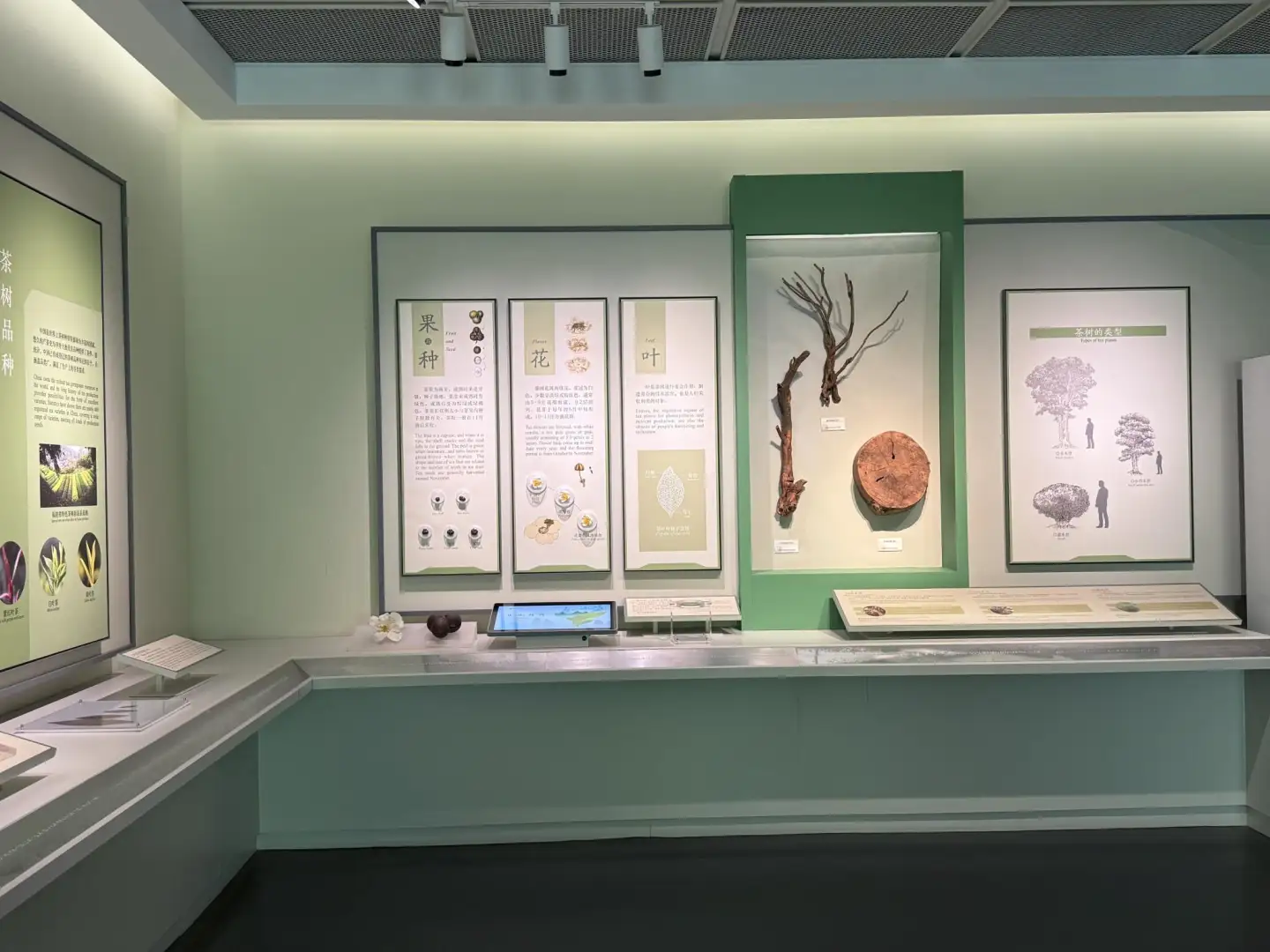
Hall One covers the botany and processing of all six tea classes — green, red, oolong, yellow, white and dark — with physical samples of each cultivar, interactive touch screens that plot the origins of over 500 teas, and brewing videos for the major classes. Visitors consistently call it the most informative single stop in Hangzhou.
Thatched Pavilion Among Tea Bushes
The signature photo spot is the thatched wooden pavilion set among tea bushes, with a brook running beneath. Visitors note it photographs best in autumn, when red maples layer against the green tea rows (best at 14:00-16:00 in late October to mid-November when afternoon light cuts sideways through the trees).
Six Tea Classes in One Hall
Hall One covers the botany and processing of all six tea classes — green, black (called "red tea" in Chinese), oolong, yellow, white, and dark (post-fermented) — with physical samples of each cultivar, interactive touch screens that plot the origins of over 500 teas, and brewing videos for the major classes. Visitors consistently call it the most informative single stop in Hangzhou.
A Jiangnan Garden as Museum Grounds
The Shuangfeng Campus is arranged like a classic Jiangnan garden — whitewashed walls, dark-tiled eaves, a winding brook, and tea bushes planted among the pavilions. The setting makes the visit feel more like a stroll through a scholar's estate than a typical museum, and the grounds themselves are part of the exhibition on Chinese tea culture.