
Faxi Temple
A quiet mountain Buddhist temple near West Lake, famous for love blessings and cheap vegetarian meals.
 Written and signed by Azalea
What it actually is
A thousand-year-old Buddhist temple in the forested hills above West Lake, known for love blessings and an incredibly cheap vegetarian lunch.
Editor's take
Worth a half-day if you're already planning to visit Lingyin or the West Lake area. Best for travelers who want a quiet working temple over photo-spectacle. Skip if you only have an hour, or if you need full accessibility (many stairs and uneven stone paths).
Essentials
Good to know
Trending now
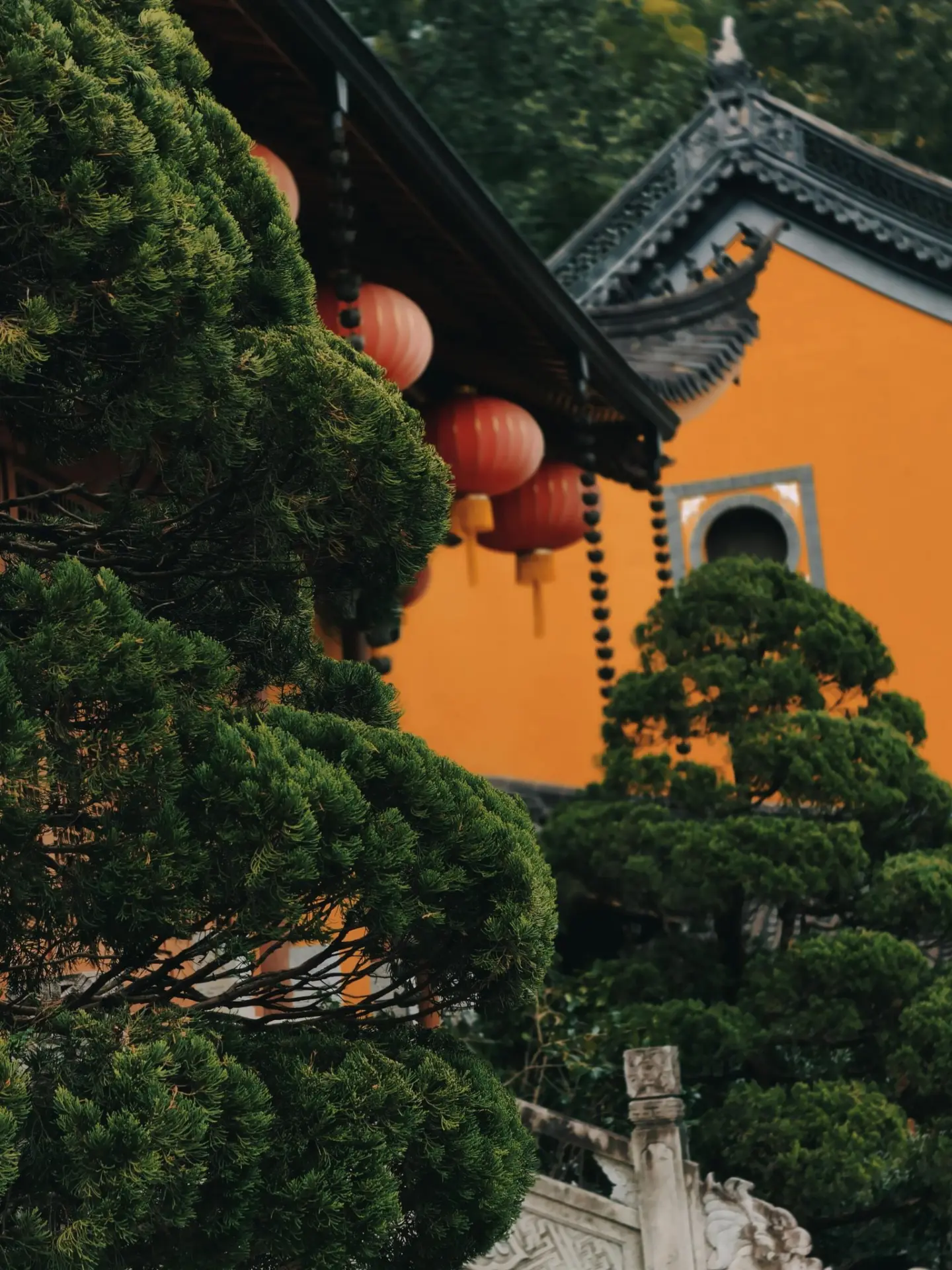
Ancient Yellow Walls and Flying Eaves
Wander past weathered yellow temple walls and sweeping upturned eaves that have stood for over a thousand years. The tucked-in mountain setting amplifies every quiet footstep, and the old trees draped in vines make the architecture feel half-buried in green. Most visitors call it the most atmospheric temple complex in Hangzhou, distinct from the busier Lingyin Temple just downhill.
Fortune Blessings at Yuantong Hall
Yuantong Hall (Yuantong Baodian), the main hall at Faxi Temple, is widely visited for prayers about love, family, and career. Visitors circle the temple clockwise, lighting the three sticks of incense included in the CNY 10 ticket, then bow to Guanyin (the bodhisattva of compassion) at the central altar. The temple publishes daily scripture readings and blessing notes that newcomers find easy to follow.
Vegetarian Meal in the Refectory
The temple refectory (Wuguan Tang) serves one of Hangzhou's cheapest full meals: breakfast at CNY 2, lunch and dinner at CNY 5. The menu changes daily but always features mountain mushrooms, tofu skin, and seasonal greens cooked in light soy. Visitors are asked to eat in silence and finish every grain of rice, a Buddhist custom that turns even a quick lunch into a small ritual.
Blessings for Love & Family
Yuantong Hall (Yuantong Baodian), the main hall at Faxi Temple, is widely visited for prayers about love, family, and career. Visitors circle the temple clockwise, lighting the three sticks of incense included in the CNY 10 ticket, then bow to Guanyin (the bodhisattva of compassion) at the central altar. The temple publishes daily scripture readings and blessing notes that newcomers find easy to follow.