
Lu Xiang Ancient Village
An 800-year-old Ming-Qing village on Taihu's eastern peninsula, once Grand Secretary Wang Ao's home. Quiet lanes and ancestral halls, with more than 30 Ming and Qing halls
 Written and signed by Ivy Chen
What it actually is
Lu Xiang sits on the western flank of Dongshan Peninsula, six stone lanes running straight from the village heart to Taihu Lake. Named for Grand Secretary Wang Ao's mother, it keeps more than 30 Ming and Qing halls. Lanes free; hall interiors CNY 65; two to three hours suffices.
Editor's take
Worth the detour for anyone tired of Suzhou's ticketed gardens and looking for a working Ming village with real lanes and a back-story. Skip if you only have a half-day and want polished English interpretation — pair it with Moli Feng at sunrise and a Taihu-fish lunch to fill a day well.
Essentials
Good to know
Trending now
Six lanes running to Taihu
The village is laid out as six parallel stone lanes running straight from the central archways to the lake — the name Lu Xiang (lu xiang, "land lanes") comes from this layout. Each lane is one to two meters wide and flanked by whitewashed Ming walls and stone drainage gutters still in use.
Wang Ao's three memorial archways
At the village center stand three Ming-era paifang (memorial archways) honoring Wang Ao (1450-1524), who rose to Grand Secretary (a top Ming-dynasty cabinet post) and whose mother was surnamed Lu. The calligraphy was reputedly carved by his friend Tang Bohu (Tang Yin, the famed Ming painter-calligrapher).
Hui He Tang and the Ming brick carvings
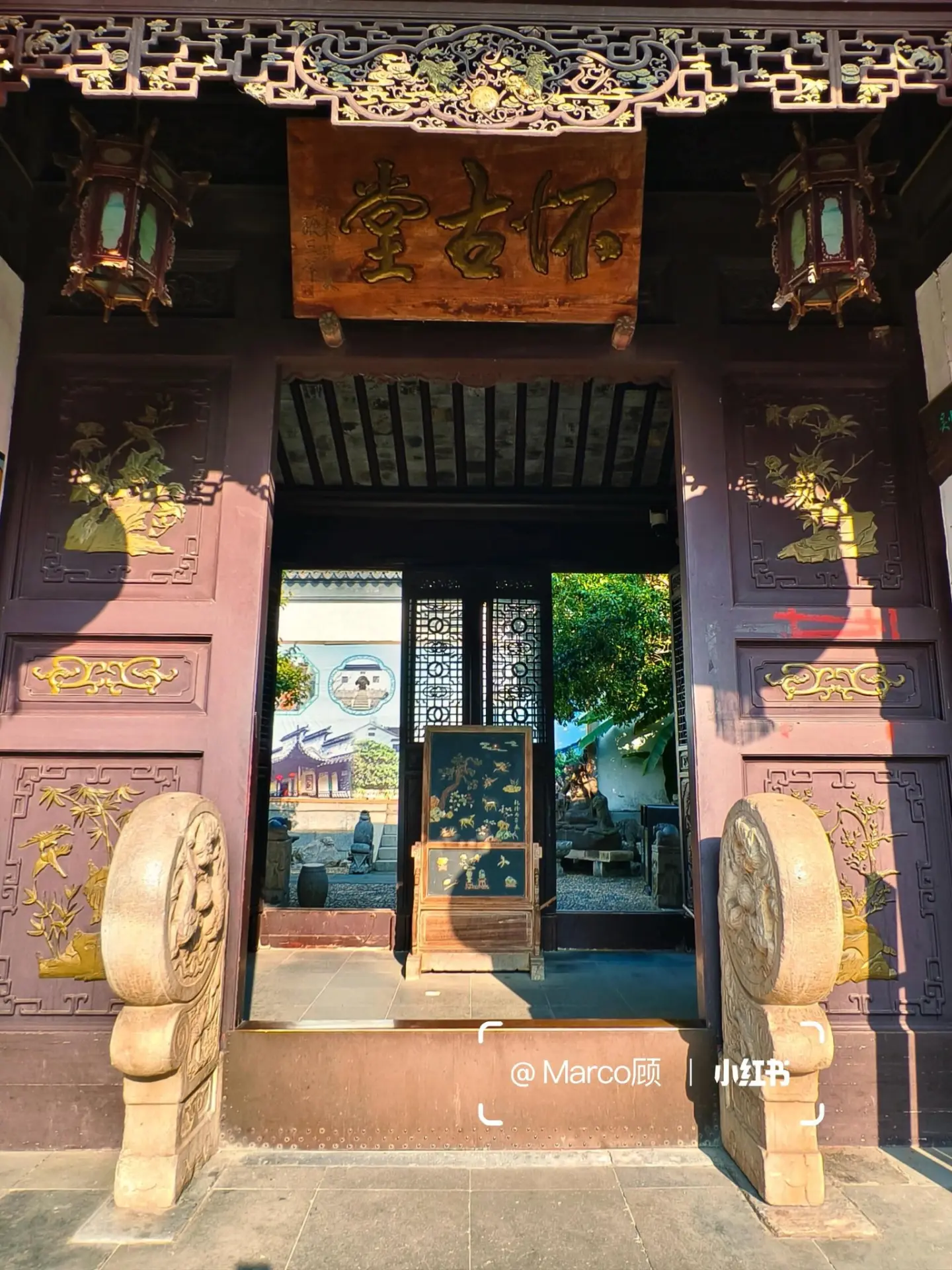
Hui He Tang is Wang Ao's family hall, a Ming-built structure with a nanmu-wood (a fine-grained hardwood prized in Ming architecture) main hall, Tang Bohu's calligraphy on the pillars, and a brick screen wall carved with nine lions and a phoenix — a rare surviving set of Ming-era decorative brick reliefs.
Loquat harvest in May
Dongshan is one of Suzhou's two main loquat regions. White Jade (Bai Yu) loquats ripen in late May; villagers sell baskets at the lane mouths for around CNY 20 per jin (500 g). Self-picking orchards charge about CNY 28-30 per jin.
Sui Gao Tang — Dongting merchant guild hall
Built in the Hongzhi reign (1488-1505) and the oldest surviving Ming residence in the village, originally the home of Wang Ao's brother Wang Quan. Now a small museum on the Dongting merchant guild (a historic Lake Taihu trading network) and how it funded the family's political rise.
Villagers still live in the lanes
Unlike many restored villages that have been cleared of residents, Lu Xiang keeps an older population: firewood stacked at back doors, tiny cigarette-and-snack shops at the lane mouths, and elderly residents playing chess under the persimmon trees. Off-season you may see only a handful of visitors a day.
Bao Jian Tang and the Song Dynasty (960-1279) roots
Originally the garden residence of Ye Mengde (1077-1148), a Southern Song minister and poet, the hall keeps its Ming-era renovation: an official-hat beam shape (so-called "official-cap hall"), calligraphy by Shen Zhou (founder of the Wu School of Ming painting), and a small pool-centered garden.