
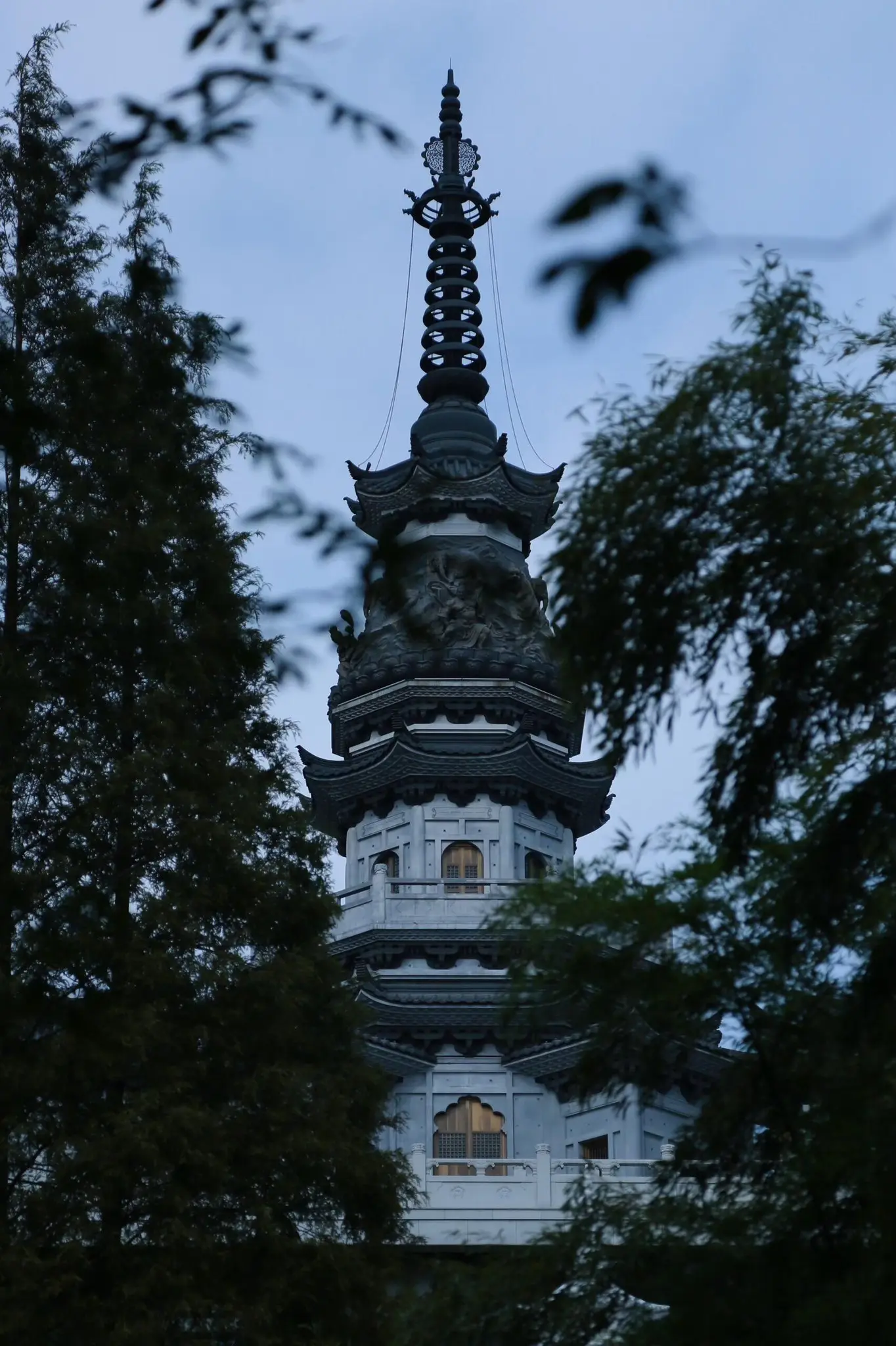
Jingshan Temple
A 1,200-year-old Zen temple above Hangzhou and the cradle of Japan's matcha ceremony, where pilgrims climb through seven incense-filled halls — each devoted to a different prayer,
 Written and signed by Alex Chu
What it actually is
Founded in 742 AD and ranked first among the Southern Song Five Mountain Monasteries, Jingshan Temple crowns a tea ridge an hour west of Hangzhou. Pilgrims take a free shuttle to the summit and walk clockwise through seven incense-filled halls — the birthplace of the Jingshan Tea Ceremony that Japanese monks carried home to seed Japan's matcha tradition.
Editor's take
Worth a full half-day for anyone interested in Zen Buddhism, Chinese tea culture, or a quieter alternative to Lingyin Temple. Photographers will find their best material at the Lingxiao Hall summit in the early morning of a clear spring or autumn day. Skip it if you are on a strict two-hour Hangzhou city tour — the mountain transfer alone consumes most of that window.
Essentials
Good to know
Trending now
Birthplace of the Japanese Matcha Ceremony
Built in 742 AD during the Tang Dynasty (618-907) and ranked first among the Southern Song's Five Mountain Monasteries (Wushan, the imperial Zen ranking), Jingshan Temple is where Southern Song monks perfected the Jingshan Tea Ceremony between the 12th and 13th centuries. Japanese pilgrims, most famously the monk Eisai (Myoan Eisai, founder of Japan's Rinzai Zen and matcha tradition), carried those tea-preparation methods back to Kyoto — a direct lineage that today's visitors still taste in the temple's matcha lattes and the surrounding tea terraces.
Seven-Hall Pilgrimage Circuit
Pilgrims follow a clockwise incense circuit through seven halls — Wufeng Mountain Gate, Tianwang (Heavenly Kings), Shijia (Main Buddha), Yaoshi (Medicine Buddha), Lingxiao (summit overlook), Guanyin (Thousand-Armed), and Dragon-King with the side Wealth Hall — praying in turn for safe travel, family health, career and study, and fortune. The most-photographed moment is climbing the 108 steps to Lingxiao Hall, where the summit view opens across the tea gardens and bamboo valleys (best at 7-9 AM in Mar-May when morning mist rises from the valleys).
Jingshan Noodles and the Matcha Café
Two signature tastes anchor a visit: the Jingshan noodles (Jingshan sumian, ¥19 a bowl) at Miaoxiang Hall, a bamboo-shoot-and-vegetable noodle dish served only from 11:00 to 14:00, and the temple's matcha lattes and matcha ice-cream at the cafe by the Dharma Objects Shop, a direct taste of the tea ceremony that began on this mountain 800 years ago. Visitors can also book the scripture-copying session at Chao Yin Ge Hall (8:30-16:00, scan a QR code on the left-side second floor) for a quieter half-hour of meditation with brush and ink.
Jingshan Noodles and the Matcha Café
Two signature tastes anchor a visit: Jingshan noodles (a bamboo-shoot-and-vegetable noodle dish, ¥19 a bowl) at Miaoxiang Hall, served only 11:00–14:00, and the temple's matcha lattes and matcha ice-cream at the café beside the Dharma Objects Shop (the temple's religious-goods and souvenir store) — a direct taste of the tea ceremony that began on this mountain 800 years ago. You can also join a scripture-copying session at Chao Yin Ge Hall (the sutra-copying hall, 8:30–16:00, scan the QR code on the left-side second floor) for a quieter half-hour of meditation with brush and ink.
Jingshan Noodles and the Matcha Café
Two signature tastes anchor a visit: Jingshan noodles (a bamboo-shoot-and-vegetable noodle dish, ¥19 a bowl) at Miaoxiang Hall, served only 11:00–14:00, and the temple's matcha lattes and matcha ice-cream at the café beside the Dharma Objects Shop — a direct taste of the tea ceremony that began on this mountain 800 years ago. You can also join a scripture-copying session at Chao Yin Ge Hall for a quieter half-hour of meditation with brush and ink.
Jingshan Noodles and the Matcha Café
Two signature tastes anchor a visit: Jingshan noodles (a bamboo-shoot-and-vegetable noodle dish, ¥19 a bowl) at Miaoxiang Hall, the temple's pilgrims' canteen, served only 11:00–14:00 — and the temple's matcha lattes and matcha ice-cream at the café beside the Dharma Objects Shop (the religious-goods and souvenir store). You can also join a scripture-copying session at Chao Yin Ge Hall, the sutra-copying hall, for a quieter half-hour of meditation with brush and ink.
Seven-Hall Pilgrimage Circuit
Pilgrims follow a clockwise incense circuit through seven halls — Wufeng (Five-Phoenix) Mountain Gate, Tianwang (Heavenly Kings) Hall, Shijia (Main Buddha) Hall, Yaoshi (Medicine Buddha) Hall, Lingxiao (Summit Overlook) Hall, Guanyin (Thousand-Armed) Hall, and the Dragon-King Hall with the side Wealth Hall — praying in turn for safe travel, family health, career and study, and fortune. The most-photographed moment is climbing the 108 steps to Lingxiao Hall, where the summit view opens across the tea gardens and bamboo valleys.