
Suzhou Silk Museum
China's first silk museum: 7000 years of silk civilization, live Song-Jin brocade looms, free entry near Beisita Pagoda.
 Written and signed by Alex Chu
What it actually is
China's first professional silk museum near Beisita Pagoda, set in a 9460 m2 complex of six themed halls. Visitors watch live Song-Jin brocade (a UNESCO-listed brocade technique) weavers operate tall wooden looms, then stroll past Ming-dynasty (1368-1644) imperial robes and silkworm life-cycle displays. Free entry, no reservation, easy metro access from Line 4.
Editor's take
Worth a half-day if you are already in Suzhou for the gardens; skip if you have less than a day in the city or your group has no interest in textile craft. Best on a weekday morning to avoid the loom-hall crowd; arrive before 9:30 if you want a free locker.
Essentials
Good to know
Trending now
Live Song-Jin Brocade Looms
Two teams of weavers in the Weaving and Dyeing Workshop operate an 8-metre-tall Song-Jin pickup loom and a Wucai Zhangduan loom by hand, and you can stand close enough to hear the shuttle. Song-Jin (a UNESCO-listed brocade technique named after the Song and Jin dynasties) is the highest-skill silk-weaving method in China; the museum is one of the few places where it is still demonstrated daily.
Ming-Dynasty Imperial Robe as Treasure
The Ancient Hall holds the museum's signature piece: a Ming-dynasty (1368-1644) Huang Duan Di Shidi Kongque Wen Zhicheng Lanpao, a yellow satin robe woven with persimmon-calyx and peacock motifs that was once a tribute weaver's masterwork. Other standouts include Tang-dynasty (618-907 AD) silk fragments and Republican-era qipao (a tight-fitting cheongsam dress that became the signature women's wear of 1920s-1940s China).
Silkworm Life-Cycle Room
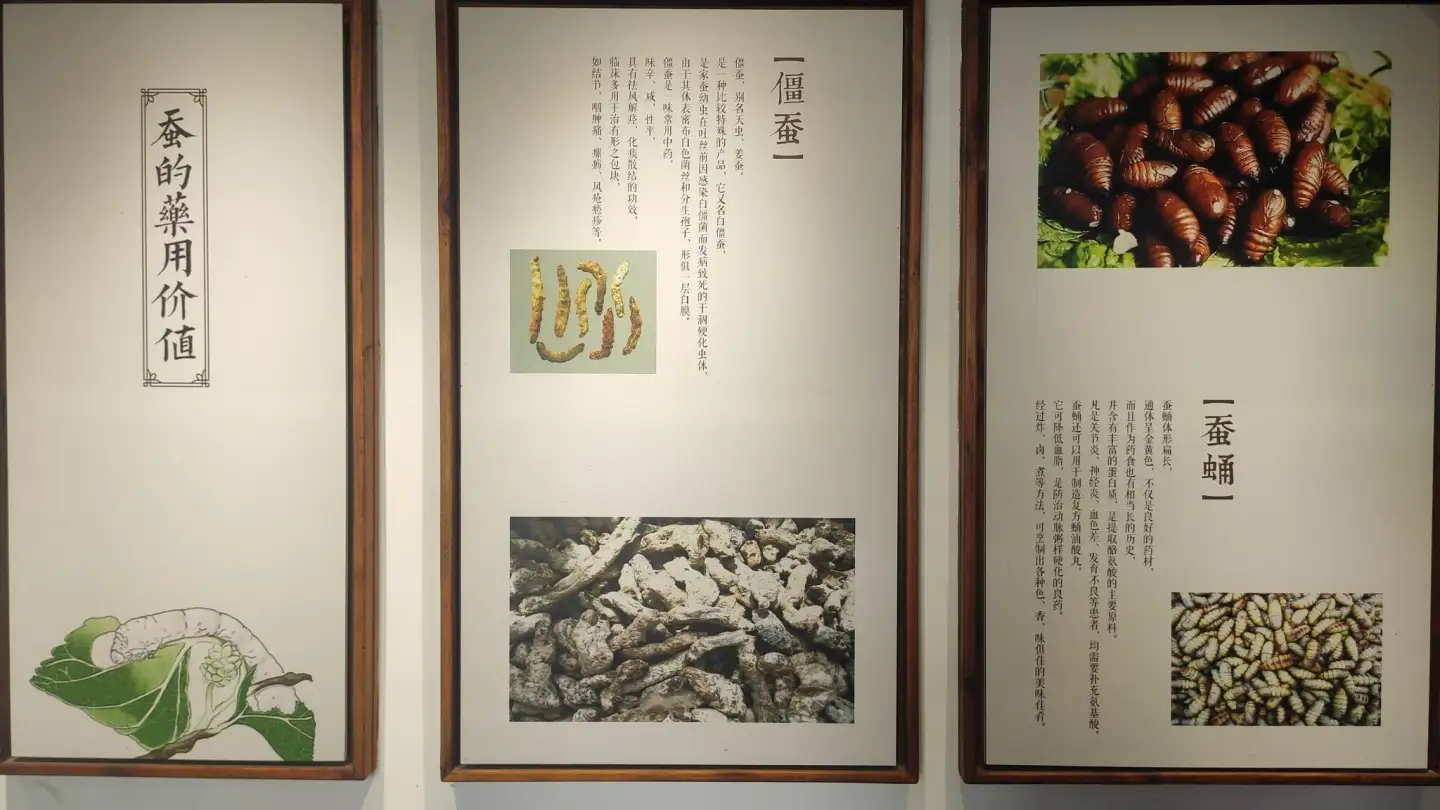
In the Cansang Dwelling you can see every stage of a silkworm's life (egg, larva, pupa, moth) on mulberry leaves under glass, and a small speaker plays the soft rustle of caterpillars feeding. Outside, the Sangzi Garden recreates a small Jiangnan (literally south of the Yangtze (China's longest river, roughly 6300 km), the lower Yangtze cultural region) silkworm-raising household around a real mulberry grove.