
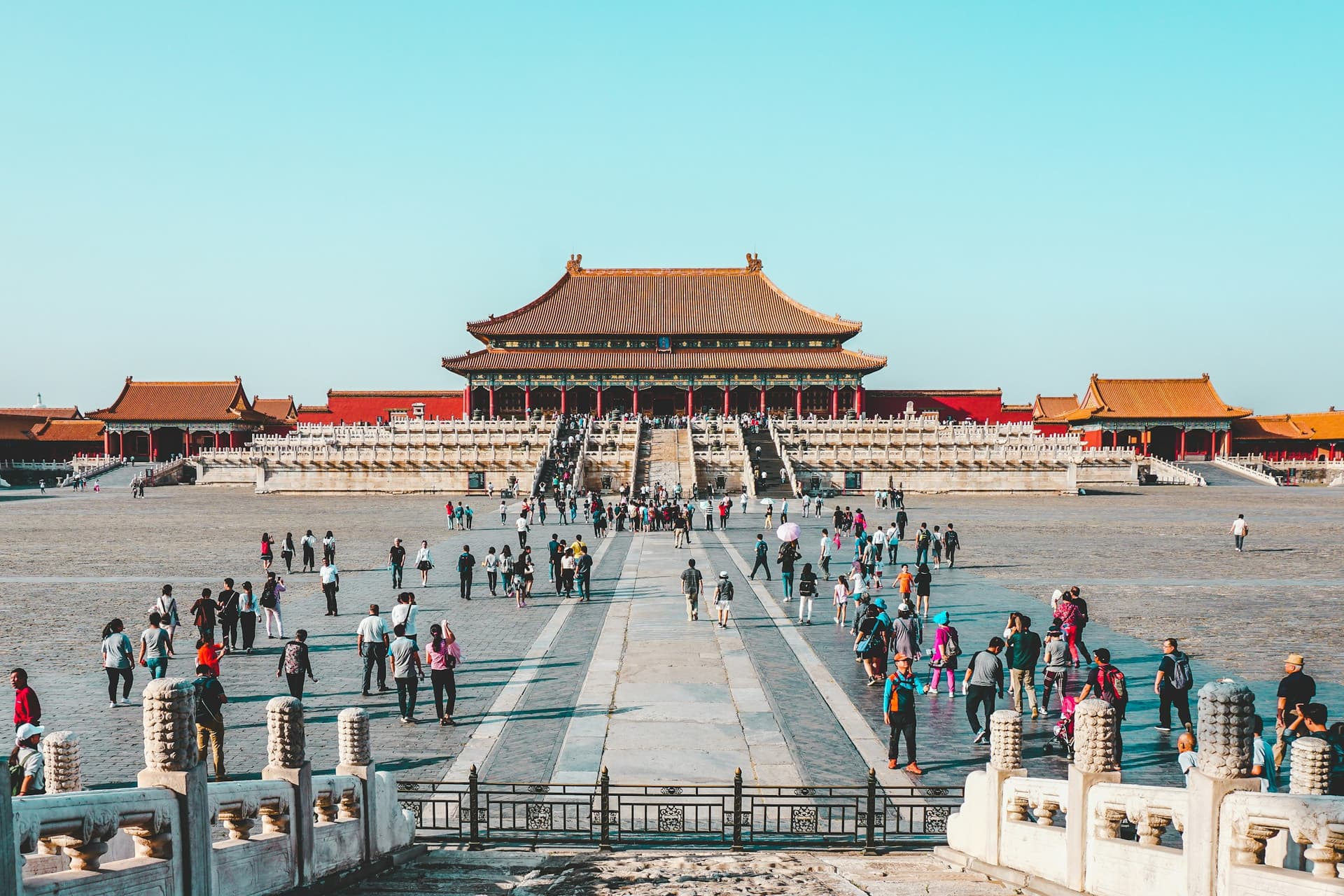
Beijing needs four days. Two go to the imperial core and the Great Wall, which you cannot skip. The other two go to the parks and hutongs, which are what people end up liking about the city. Capital (PEK) and Daxing (PKX) airports are both designated visa-free transit ports, the whole municipality is inside the permitted area, and if you are arriving by train from Shanghai you are already covered.
The itinerary below assumes four full days. Combined with three in Shanghai and a travel day it uses eight of your ten. If you are new to the scheme, read the 240-hour visa-free transit guide first, particularly the onward-ticket rule.
Before you arrive: two bookings that cannot wait
- Forbidden City tickets are released seven days ahead on the Palace Museum's official channel and sell out, especially for weekends and holidays. Book with your passport number the moment your dates are fixed. Closed on Mondays.
- Tiananmen Square requires a free reservation in advance (also passport-based) to enter the square itself. The reservation is separate from the Forbidden City ticket. Book both for the same morning.
Great Wall, Temple of Heaven and Summer Palace tickets can be bought on the day or the evening before, but online booking avoids queues.
Where to stay. Dongcheng, anywhere between the Drum Tower and Wangfujing, puts you within walking distance of the hutongs and a short metro ride from everything else. Courtyard hotels in the hutongs are the ones people remember; the larger hotels near Wangfujing are easier to get a taxi to.
Airport to city. From Capital airport, the Airport Express train to Dongzhimen is 25 minutes, then a taxi or metro. From Daxing, the Daxing Airport Express to Caoqiao is 20 minutes, then Metro Line 10. Taxis and DiDi take 45 to 90 minutes depending on hour.
Day 1: Tiananmen and the Forbidden City
Morning. Enter Tiananmen Square with your reservation as early as your slot allows, walk north through the Tiananmen gate and into the Forbidden City by the Meridian Gate. Allow at least three hours; the central axis alone takes ninety minutes at a walking pace, and the eastern galleries (clocks, treasures) are where the crowds thin. Exit north by the Gate of Divine Prowess.
Afternoon. Directly across the road is Jingshan Park. The climb to the pavilion takes fifteen minutes and gives the only overhead view of the Forbidden City's roofs. Then walk west into Beihai Park for the lake and the white dagoba, or east to Wangfujing for a late lunch.
Evening. Peking duck. The famous names (Quanjude, Da Dong, Siji Minfu) all deliver; Siji Minfu's branch near the Forbidden City east gate is the practical choice after a day on your feet, and the queue moves.
Day 2: The Great Wall at Mutianyu
Full day. Mutianyu is the section to choose for a first visit: restored but not crowded like Badaling, with a cable car up, a toboggan down, and a long walkable stretch of wall with watchtowers. It is 70 km north of the city, inside Beijing municipality, so fully within the permitted area.
Getting there: a hired car or DiDi (around 90 minutes each way) is the simplest; the tourist bus from Dongzhimen runs on a schedule that suits a morning start. Leave by 7:30 to be on the wall before the tour groups arrive around 10. Walk from tower 14 towards tower 20 for the steep, empty stretch, then back to the cable car.
Evening. Back in the city by mid-afternoon. Rest, then an easy dinner in the hutongs around Nanluoguxiang; the main lane is a tourist strip, the side hutongs (Mao'er, Ju'er, Fuxue) are where to eat.
Day 3: Temple of Heaven, then the Summer Palace
Morning. Temple of Heaven at opening time, when the park belongs to locals doing tai chi, cards and choir practice. The Hall of Prayer for Good Harvests is the building on the postcards; the Circular Mound Altar and the Echo Wall to the south are quieter. Two hours.
Midday. Metro to the northwest of the city (about 50 minutes) and lunch near the Summer Palace east gate.
Afternoon. The Summer Palace: the Long Corridor along Kunming Lake, the Marble Boat, the climb up Longevity Hill to the Tower of Buddhist Incense, then a ferry across the lake back to the east gate. Three hours at an easy pace. In summer, come later in the afternoon for the light on the lake.
Evening. Houhai lakes: bars and restaurants around the water, rickshaw touts to ignore, and a pleasant walk on the northern shore away from the noise.
Day 4: Hutongs, the Drum Tower, and a choice
Morning. A slow hutong morning. Start at the Drum and Bell Towers (climb the Drum Tower for the view down the axis), then wander south and east through the lanes: Guozijian Street for the Confucius Temple and Imperial College, then the Lama Temple (Yonghegong), Beijing's most active Buddhist temple.
Afternoon. Choose one:
- 798 Art District in the northeast: Bauhaus-era factory halls turned galleries, the best of contemporary Beijing, an hour by metro and walk.
- The National Museum of China on Tiananmen Square (free with passport reservation), for the ancient bronzes and the scale of the place.
- Shopping and rest: Sanlitun for modern Beijing, or simply another hutong and a teahouse.
Evening. A last dinner. Dongsi and Gulou both have good neighbourhood restaurants; if you want a show, the Liyuan Theatre's short Peking opera programme is made for first-timers.
Where this trip goes next
- From Shanghai first: if you did Shanghai, then took the train here, Beijing is your exit. Capital and Daxing both have direct flights to Tokyo, Seoul, Hong Kong, Singapore and Bangkok, all valid third destinations.
- Beijing first: reverse the order and take the 4.5-hour train to Shanghai for the Shanghai itinerary, then exit from Pudong.
- Xi'an detour: Xi'an (Shaanxi, fully covered) is 4.5 hours by train from Beijing West. Two days there for the Terracotta Army and the city wall fits inside the ten days if you shorten Shanghai to two. Do not attempt Beijing, Xi'an and Shanghai in ten days with full days in each; pick two.
Work backwards from the exit flight. If you want the days between filled in, plan a route with your entry point, exit airport and dates, and the train connections are checked for you.
FAQ
Is Beijing covered by the 240-hour visa-free transit?
Yes. Beijing is a covered municipality, Capital and Daxing airports are designated entry ports, and the whole municipality including the Great Wall sections at Mutianyu and Badaling is a permitted stay area.
Do I need to book the Forbidden City in advance?
Yes. Tickets are released seven days ahead on the Palace Museum's official booking channel, are tied to your passport number, and sell out for weekends and holidays. It is closed on Mondays. Tiananmen Square needs a separate free reservation.
Which section of the Great Wall is best for a first visit?
Mutianyu. It is restored and safe, less crowded than Badaling, has a cable car up and a toboggan down, and is inside Beijing municipality so it is within the visa-free permitted area. Jinshanling and Simatai are wilder and better for hikers but need more of the day.
How many days do I need in Beijing?
Four full days covers the Forbidden City, the Great Wall, the Temple of Heaven, the Summer Palace and the hutongs without rushing. Three is possible if you drop the Summer Palace or the fourth-day options.
Can I combine Beijing and Shanghai in 240 hours?
Yes, and it is the most common first trip. Four days in Beijing, a 4.5-hour high-speed train, three days in Shanghai, and a flight out to a third country from Pudong uses eight or nine of the ten days.
Is the Beijing metro easy for foreigners?
Yes. Signs and announcements are in English, fares are paid by QR code in Alipay or WeChat Pay, and every station has bag screening at the entrance. Allow extra time at large interchanges.
Last updated 22 September 2026. Ticket-release rules, opening days and train timetables change; confirm before you go. Visa-free transit rules are summarised in our 240-hour guide and published by the National Immigration Administration.